
The Architecture of Belief / Opening pages
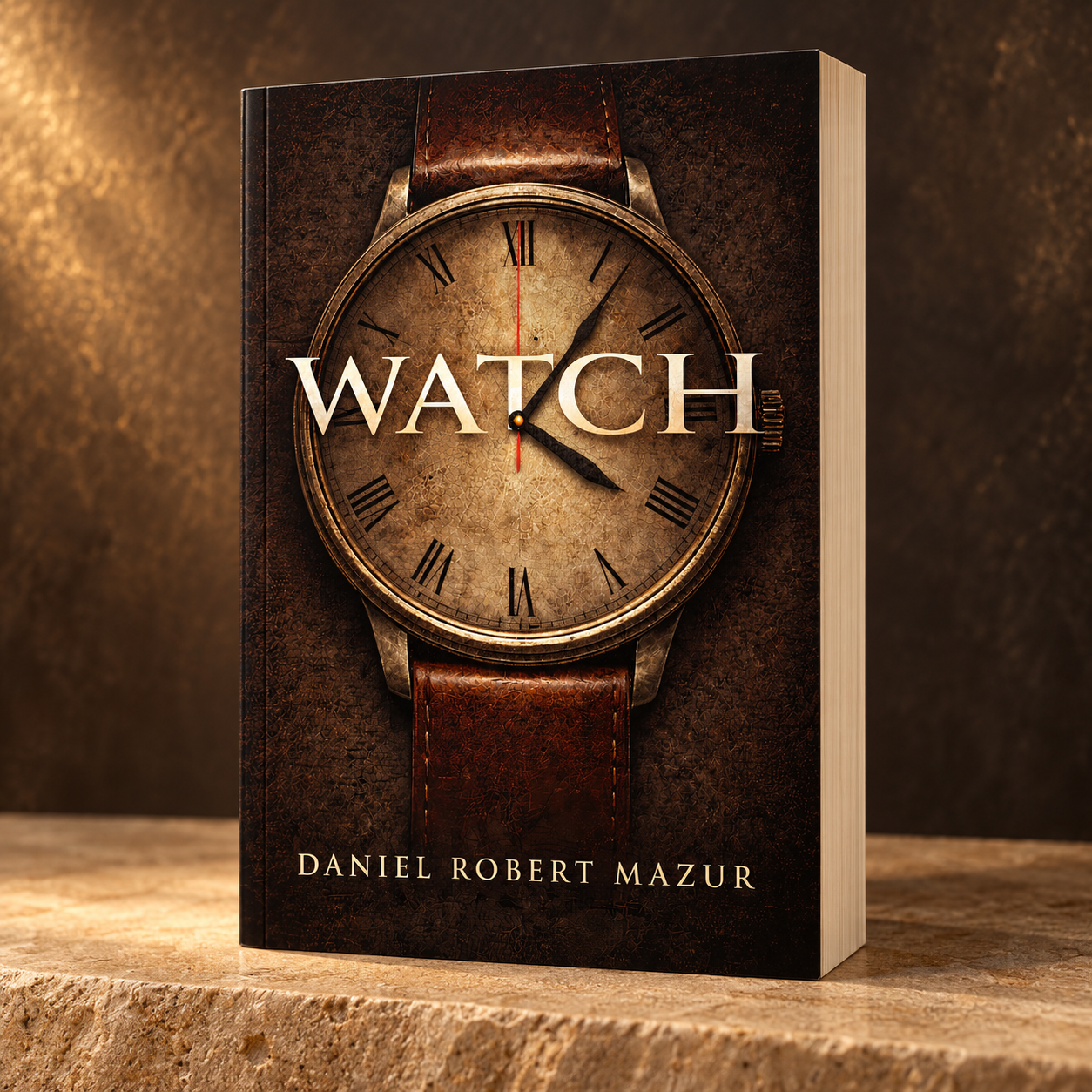
WATCH
A novel by Daniel Robert Mazur
How do you know if the life you live is the one you chose?
Begin with the story. Read the first ten chapters of WATCH.
Free excerpt · 10 chapters · About 25 minutes
In this excerpt · Jump to a chapter
“For nothing is hidden that will not be made manifest, nor is anything secret that will not be known and come to light.”— Luke
Chapter 1The First Kindness
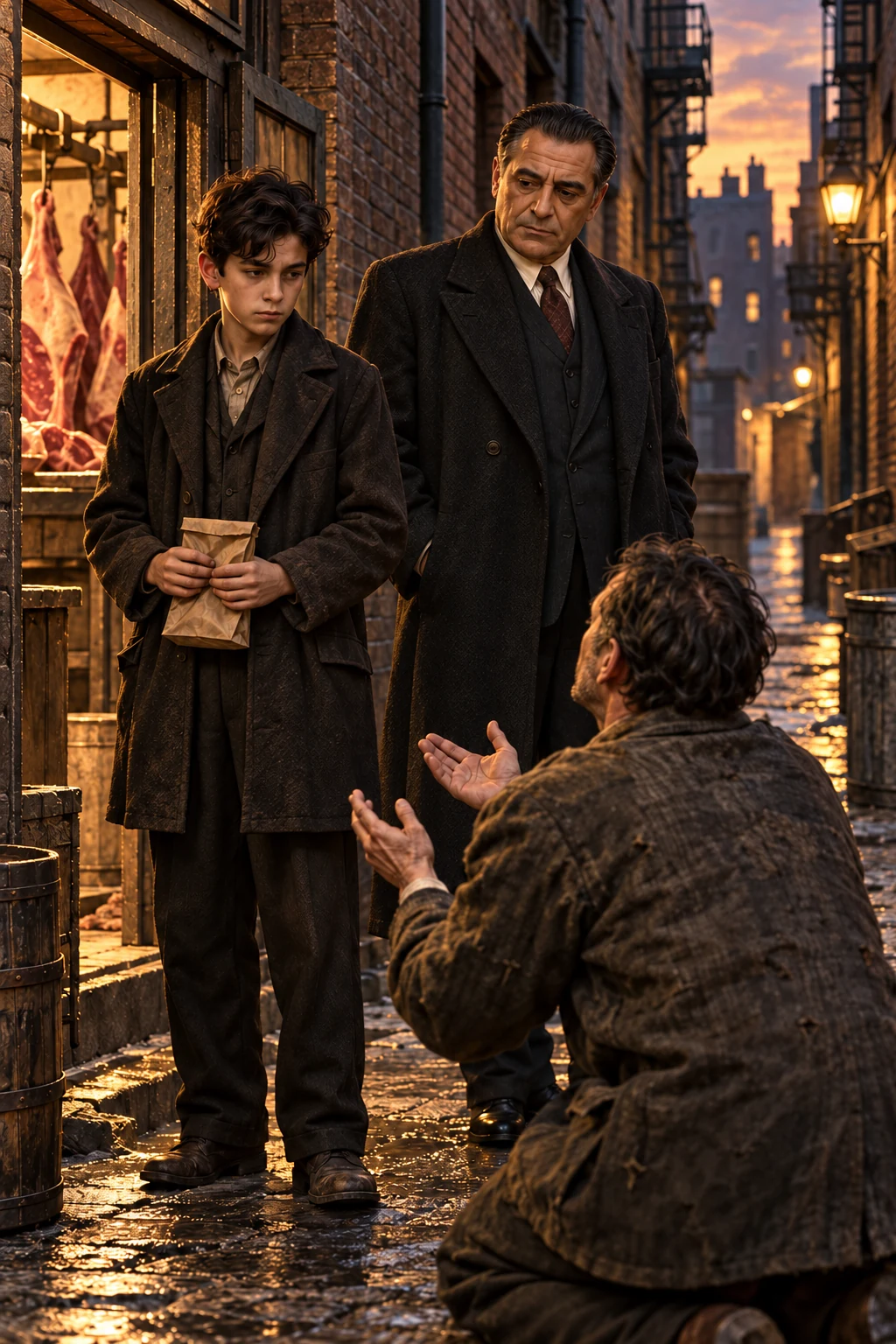
The first time I saw a man beg for his life, I was told not to look away.
“Watch,” Salvatore said. “You don’t learn anything with your eyes closed.”
It was late, and the alley behind the butcher’s shop smelled of rot and bleach. The man was on his knees, trembling like a dog beaten too long to remember it once had teeth. Salvatore didn’t raise his voice. Didn’t raise a hand. He only spoke, his voice low and measured, like someone leading prayer in a room where no one believed.
And I, who never came to know my father, stood beside him with a paper bag in my hand, half a sandwich inside, still warm, and waited for the verdict.
I didn’t flinch. That’s what impressed him most.
“You’ve got the kind of eyes that carry secrets,” he said. “No leaks. That’s rare.”
I didn’t know what that meant, only that it made him smile. And I wasn’t sure I wanted to be the kind of boy he thought I already was.
I never said this to him or to anyone, but I hoped the man would die. Because if he did, I’d know what I was being asked to stand inside.
Some people speak of childhood as a sanctuary, a holy beginning untouched by the dirt of the world.
Maybe it was once.
Before I turned six. Before evenings grew longer and the lights stayed off too long. Before my mother’s crying changed from something rare into something regular.
I remember waiting by the door until the streetlights came on. A man’s voice down the hall I didn’t recognize. The rug staying damp for days after someone spilled a drink.
For me, childhood wasn’t a place of innocence. It was an exit wound.
My mother lived in a small one-bedroom walk-up. The stove leaned. The windows were sealed with plastic and tape. She smoked long menthols and had a fondness for men who left by morning. She never spoke of my father, and I never asked. Some part of me knew she didn’t have the words.
There was a time when I thought she loved me.
I remember her hand on my head while I slept. She must have thought I wouldn’t notice. Maybe she needed it to mean something she couldn’t say aloud. Maybe it meant nothing at all.
That’s the danger with memory. It offers comfort without the courtesy of truth.
When things got bad, I’d leave for a day or two. I knew which benches stayed dry when it rained, and I learned which stores tossed good food before closing. Once, behind a bakery on Twelfth, I found a whole loaf of rye bread in a black trash bag. I ate it slowly over two days, hiding the slices under my coat, so no one would take them.
At night, I lay awake and tried to name one thing in the world that belonged to me.
Sometimes I counted the things I didn’t steal. That helped.
One night, while trying to sleep on a park bench, I heard a faint ticking beneath me. Through the gaps between the slats, half covered by paper, caught in the reach of a distant lamp, I saw it.
A small box.
Inside, tissue held a thin wristwatch with a cracked crystal. The second hand kept time with a patient rhythm, each tick small enough to become part of the night. A folded receipt lay at the bottom. I kept it, thinking if I brought it back, they might give me a few dollars.
I didn’t believe in God. But I didn’t believe in nothing either.
It’s hard to be certain when you’ve seen a woman close her eyes and sing to no one while scrubbing a floor or when a man with no teeth gives you his only pair of gloves because “you look colder.”
If God exists, I thought, He prefers back doors. He doesn’t like to be watched.
By the time I stopped going back, home was more of an idea than a place. I didn’t run away. I just stopped returning.
There were shelters, but they came with rules, questions. And sometimes the people in charge treated me the way people treated cats in the road. Curious but not enough to stop.
That’s when I saw him. Salvatore.
I’d just left Mercer Pawn. They gave me twenty dollars for returning the watch. When I handed it over, the clerk wound it once and listened. It ticked stronger, like a thing relieved to be touched again.
I stopped at the curb for a closer look at the car I noticed on my way in. A deep-green Cadillac, polished like marble, idling at the hydrant.
He came out of the deli on the corner, the smell of warm bread and vinegar following him.
“You hungry?” he asked.
I nodded.
He tore a sandwich in half and handed me a piece. He didn’t wait for thanks. He opened the door, slid behind the wheel, and drove away.
That was the first kindness I received without a condition.
Though it was just a sandwich, it lodged somewhere deep.
I didn’t smile, and I didn’t cry. But a part of me rearranged itself.
Quiet. Sharp. Like a chair being pulled out for a guest I didn’t know I missed.
Maybe that’s what drew me back.
I waited outside that deli each day for nearly a week. On the sixth afternoon, the Cadillac eased up to the hydrant again. He stepped out, set a paper bag on the roof, then noticed me.
“You again,” he said. “I remember you. You know how to carry a bag without dropping it?”
I said I did, though I wasn’t sure.
From there, it unfolded.
Small tasks. Then larger ones. I never asked what I was carrying or who it was for. I delivered what I was told, kept quiet, and returned change when there was too much.
Over time, I noticed the way others behaved around him.
Deference. Fear. The occasional forced smile.
I didn’t understand what kind of man he was, but I knew he wasn’t someone people lied to. Or touched without asking.
What surprised me wasn’t that he trusted me but that I trusted him.
Some bonds form not in words but in absence. When someone could betray you and doesn’t, that absence becomes a kind of presence.
Salvatore never made me feel owned, but he made me feel watched. And in those days, being seen was the closest I came to feeling safe.
That’s when the trouble began.
Because once he believed in me, he began to call on parts of me I didn’t want to know I had.
He said I had judgment. Calmness. A good face for a bad world.
Then he asked me to stand beside him.
That was the day I watched a man fall to his knees and beg. The day I pretended I had no heart at all.
Chapter 2Who Holds the Rag?
Some things Salvatore said stayed with me because of what followed them.
“There are men who carry knives and men who carry silence,” he told me. “The ones you need to watch are the ones who confuse the two.”
I thought I understood. Then a few days later, I saw it for myself.
A man stood behind the shop, his arms folded, unmoving. I didn’t know him. I handed him the package. He gave no name. Asked no questions. Gave only his attention, fixed on me for too long.
My chest tightened as if bracing for a blow that never came.
That was when I began to understand what Salvatore meant.
Later that week, I met another man outside the back of the shop. Wiry. Wrapped in a coat two sizes too big. When I asked his name, he only nodded, took the envelope, and studied me as if measuring what I brought besides paper.
This time I paid attention to what he withheld. How easily it could disarm. How easily it could be mistaken for composure. Or worse, peace.
The difference stayed with me. Peace had a different shape. This was a test of who would speak first and who had learned not to.
Harm didn’t always announce itself. Sometimes it waited long enough to pass for calm.
Salvatore never explained what he meant. He didn’t have to.
That was his way. He let his words remain unfinished, then watched to see what I would do with the part he left out.
He kept a small space above the shop. Nothing fancy. A worn chair. A desk scored with deep scratches. A coat rack with only one coat. It smelled faintly of tobacco and old varnish, and the floor creaked when he crossed it.
It was the only place I saw him alone. The only place that seemed to belong to him. The only place that didn’t feel borrowed or staged.
That distinction stayed with me more than I expected. He never told me to go there. He’d just say, “Walk with me.”
And I would.
Sometimes we didn’t talk. He just sat in his chair, his coat folded over the armrest. I leaned against the wall, my hands in my pockets. Between us, the room seemed to lengthen, filled by the sounds of distant traffic and the building’s occasional groan.
It wasn’t uncomfortable. It felt like a truce. An agreement that neither of us needed to fill the air.
In that space, I began to understand that words weren’t the only way to be heard. What remained unspoken could carry its own meaning. Sometimes more than speech.
I tried it once, the way he did.
Still. Patient. Waiting for the other to break.
It worked.
But what entered the space was colder than I expected. I didn’t yet know its name.
Once, he handed me a coin as if it were a puzzle piece. “Every man has something in his pocket that tells you what kind of man he is,” he said.
Then he nodded toward me. “What’s in yours?”
I didn’t know how to answer, so I said the only honest thing I had.
“Nothing.”
He looked pleased.
“Good. Better to start with nothing. Then you know who gave you what.”
At the time, I thought it was another test. Maybe it was. But maybe he meant more. As if emptiness was not lack but space waiting to be claimed.
It was around then that I began to notice how often he spoke in parables. Short, winding sayings that stayed with me long after the words were gone. They puzzled me at first. Then they grew into truths I hadn’t yet earned, lessons shaped more by what they refused to say than what they offered.
“A man who watches too long forgets what he came to see.”
“Faith is when you keep walking after your eyes go blind.”
“Loyalty’s not about truth. It’s about where you sleep at night.”
They sounded like scripture. Not the kind read in churches. More like rules I was meant to live by.
Sometimes I wasn’t sure whether I admired them or feared what they were making of me. But I followed them because I wanted to belong. And maybe because I was tired of standing outside everything, pretending it didn’t matter.
He introduced me to others. No names at first. Just a nod here. A glance there.
I was the kid at his side, and that meant something. It meant I wasn’t invisible anymore.
One man called me “the boy who doesn’t blink.”
Another said, “He’s the shadow Salvatore grew.”
I never knew how to take those words. Part of me wanted to vanish into them. Another part wondered if I was already disappearing into something Salvatore needed more than I understood.
I didn’t respond.
That was part of the ritual too.
Speak less. Watch more.
They started sending me farther. Delivery runs across the river. Through alley doors. Past rusted gates. I never asked what was in the envelopes or boxes. That was part of the trust. A choice made each time I passed a question and left it unasked.
Especially on days when curiosity nearly stopped me.
Once, I lingered too long at the back door, my fingers resting on the seal of a thick brown envelope.
But I let it go. I always did.
One night, back in the space above the shop, he asked, “You ever wonder what makes a man clean?”
I shook my head.
“It’s not soap,” he said. “It’s who holds the rag.”
Then he turned toward the window. “Some stains never come out. But people sleep better when they see someone else scrubbing.”
That was the moment I began to wonder if he shaped the stories people told themselves.
In the days that followed, I listened more carefully to how others spoke about him. How they repeated his words like mantras. How fear shifted into reverence.
It was subtle, but it was there. His presence entered their reasoning. Their excuses. The way they explained what they’d already agreed to accept.
And in that way, he became more than a man.
He was someone people leaned on.
Dangerous. Comforting at first. Gradually, harder to leave.
Like a whispered promise in a locked room, one you stayed with longer than you meant to.
I didn’t yet know what I was part of. But I knew this: around Salvatore, there were rules.
I just didn’t know which ones were meant to protect me and which ones were meant to keep me quiet.
Chapter 3What the Camera Missed
When I try to remember my beginning, it doesn’t arrive whole.
Only pieces come.
Scenes without edges. Sensations without names.
A small kitchen window. The screen torn at one corner. A girl’s voice calling from the yard. Not to me. Through me. The words are never clear. Only the rise and fall of sound, wind moving around a name I’ve forgotten.
I don’t know who she was. Only that she knew something I didn’t and that she left before I could ask.
Other times, I’m watching someone leave.
A man.
He walks down a hallway, his back turned, and I know before the door closes that he’s not coming back. I never understood him. I only remember his name being spoken. And the hush that followed.
Absence.
There’s a photograph of me as a boy, or at least there was. I’m standing near a plastic tricycle, holding a toy camera. I’m smiling, not because someone asked me to but because I hadn’t yet learned not to.
That’s how I know it’s old.
Smiles in photographs lie. They last longer than the moment ever did.
I think about that picture and wonder what came after. What the camera missed. What cracked just outside the frame.
Somewhere between that photo and now, the break began.
A drift.
A voice moving too far from the microphone. You can still see the mouth, but the words no longer reach.
Maybe that’s what happened to me.
I drifted. Or life drifted from me.
I’ve asked myself a hundred times what changed. Where I lost the part that smiled without effort. But the truth is, I don’t know.
Only that the questions came first.
And some answers, when they finally arrived, felt like new questions wearing masks.
If there’s a beginning to this story, it isn’t a moment.
It’s a condition. The condition of watching life from just outside it, unsure whether I’m part of what happens or only the lens that records it.
Maybe that’s why I held on to the old toy camera.
It reminded me that I once thought I could keep what passed before me. That what I saw had weight. That meaning could be held.
I’m not sure I believe that anymore, but I still look. Even when it hurts. Even when I wish I wouldn’t.
Maybe seeing, even when I can’t stop what happens, is what keeps me from disappearing.
The toy camera is long gone. But sometimes I close one eye and frame the day with my fingers, pretending it still works.
Or that I do.
Because maybe looking closely is a way of remaining. A kind of belonging, even when no one sees me back.
Chapter 4The Cost of Going Up
I wasn’t told what to wear, but the others always wore black. Plain shirts. Slacks. Coats. The color didn’t ask questions or explain.
“Some people wear names,” Salvatore once said. “Others wear silence.”
He didn’t say which kind of person I was. He didn’t have to.
A man named Victor ran the garage behind the shop. Short. Thick-armed. Voice like a door closing. He didn’t speak to me for weeks. Then one day, without looking up, he said, “If you’re going to hang around, you’d better learn the lift.”
He didn’t mean a ride. He meant the platform that raised the cars.
The lesson wasn’t about mechanics. It was about listening. I had to sense when the load shifted. Watch the lines. Hear the strain before it became failure.
“Everything has a cost,” he said. “Even going up.”
Victor never told stories. The other men did. Stories that circled truth without landing. One spoke of a man who disappeared after a job went sideways. Another mentioned a kid who asked too many questions. Said no one had seen him since.
I didn’t ask who the kid was. I didn’t ask why no one spoke his name. By then, I understood. Questions weren’t currency. They were a risk. And I’d learned how to stand inside what others refused to say.
There was a safe in the back of the shop, as patient as a trap.
One evening, Salvatore opened it, then stood between me and whatever waited inside.
“You ever wonder what makes something valuable?”
I didn’t answer.
“It’s not the thing itself,” he said. “It’s how long you’re willing to bleed for it.”
Then he shut the safe and turned the dial as if locking a thought.
That night, I walked away differently. A break had opened. I didn’t tell anyone what I heard. Didn’t write it down. But I carried it. And carrying it became part of me.
Maybe that was where it really began. In the distance between what he showed me and what he chose to block from view.
The girl’s voice that never warned me.
The photograph that never told the truth.
The camera that captured nothing yet taught me to look.
Chapter 5The Shape of Risk
One drawer in Salvatore’s desk never closed all the way. I don’t know if it was the wood or the way he used it, but the half-inch gap always bothered me.
Inside were ledgers. Neatly kept. No names. Only dates. Times. Initials. One page held a single check mark. Another had an entire row blotted out with thick strokes of ink.
I read those pages as if patience might make them answer.
“Information has a rhythm,” he told me once. “It’s not what people say. It’s when they say it.” He tapped the desk. “That’s where you listen.”
I never asked who kept the books or why some lines vanished. But they mattered. Even what was missing had a shape.
A man came by the shop every few weeks. Wore a fedora like he meant it. No one spoke his name. He never faced me directly, but I noticed how his eyes followed Salvatore’s hands, as if the truth lived in his fingers instead of his face.
After he left, Salvatore wiped the desk with a cloth, even when nothing spilled.
That was the first time I wondered what I was willing to risk just to remain close to him.
Not money or power.
Meaning.
The sense of standing beside a force that didn’t flinch. Something that moved through the world without asking permission.
I didn’t yet know how deep I was, but I stopped measuring the distance.
That was when I noticed the line. Not because I crossed it but because I stopped asking where it began.
I began to wonder what I left behind and whether any way back would make me a stranger to the boy I was before I started looking too closely.
Chapter 6What Doesn’t Knock
I’d seen Salvatore in corners. Beneath streetlamps. Behind closed doors. Where voices dropped and hands stilled. But never at a kitchen table.
The house gave nothing away. No guards. No excess. A pot of sauce simmered on the stove. A child’s drawing was pinned to the refrigerator. The kind of place you pass without noticing, never suspecting it holds the man who decides what matters.
His wife greeted me with a nod and a plate of food. She said my name as if it already belonged to the room. Not the one I earned on the street but the one I hadn’t heard in years.
I didn’t correct her. I let the name rest there, fragile and unfamiliar.
Salvatore sat at the head of the table and made it seem ordinary. He asked about school, the weather, the sauce.
When he turned toward his daughter, something in him softened. Like a man facing the beauty of a distant shore, grateful for the sight of it, unsure he belonged there.
His hands didn’t shake or reach. They simply rested, folded, as if this was the only place in the world where they had nothing to prove.
His daughter passed me the bread. She couldn’t have been more than ten. Her eyes held none of the fear other people wore around him. When I thanked her, she smiled. A real smile. The kind that didn’t come from practice.
I couldn’t square it. The man who stood over trembling men and the man who kissed his daughter’s forehead. How could they be the same person? And what did it say about me that I wanted both to be true?
After dinner, I offered to clear the plates, but his wife touched my shoulder. “Not tonight.”
She saw me, not through me, not past me, and for a moment I thought the house might want me to stay. It wasn’t home, but it wasn’t borrowed either.
I wanted a place in Salvatore’s world. I wanted this one too. The sauce on the stove. The softness of a child’s voice. A warmth not earned through fear.
That was when the trouble in me took shape. Because no matter how gentle the voices or how warm the table, part of me kept listening for the door.
Not because I feared who might enter. Because I didn’t trust what might follow me in.
Chapter 7A Stranger’s Silence
A few mornings later, I sat across from a man in a café who didn’t ask questions. He didn’t speak. He didn’t need to. His silence was complete, the kind that doesn’t just lack sound but seems to empty the air around it.
I’d seen him before. Always early. Always in the same seat. A plain white mug in front of him, untouched. A dark coat, no matter the season. Never the table by the window.
He didn’t look like anyone in Salvatore’s circle. That didn’t mean he wasn’t part of it.
Salvatore never mentioned him, and that omission stayed with me. Once or twice, I thought I caught his eyes shift toward me, just long enough to say he’d already seen me coming.
One morning after a delivery, I stayed behind. I took the chair across from him without asking. He didn’t lift his head. Didn’t nod. But he didn’t tell me to leave either.
His refusal to acknowledge or dismiss me unsettled me in a way I wasn’t prepared for. It carried me back to the days I wandered without direction, to benches I claimed like borrowed names, back when I believed being unseen meant I might escape what I hadn’t yet become.
I drank my coffee slower than usual. Wondered how long he’d been sitting that way. If he told himself he was only passing time. What changed him, or if anything had.
When I finally stood to leave, I expected no answer. And that’s what he gave me. Still, I returned two days later and again the following week. There was something in what he withheld that I trusted more than explanation.
Some people don’t ask questions. They wait. And if a person sits with them long enough, he begins to wonder what others already know about him. Or worse, what he has already given away by simply remaining in the seat.
Chapter 8A Familiar Face in the Wrong Place
I didn’t expect to see anyone from my old life. That was part of the arrangement. Disappear quietly. Become someone else. Never look back.
But there he was, a familiar face from a life I thought I’d buried.
He didn’t recognize me at first. People rarely do once you’ve trimmed yourself into the version others accept. I was thinner. Quieter. Dressed in clothes that weren’t mine, though they no longer felt borrowed. Still, his eyes paused on mine. Just long enough.
He said my name. The real one. I didn’t answer, so he said it again, softer this time.
I nodded once. Enough to acknowledge. Not enough to invite.
We were in the café I always returned to, the one where the man in the dark coat never moved, never spoke, never touched the mug in front of him.
He was there that morning too. Same seat. Same untouched cup. His head didn’t turn, but I caught the shift of his eyes in the glass behind the counter, just enough to take me in. He didn’t face me. But he saw me.
The man from my old life left before I finished my drink. The man in the coat stayed. There was tension in what he withheld, as if he were keeping count of what entered and left. As if nothing was incidental. As if seeing were its own kind of record.
That night, I thought about what it meant to be recognized by someone who knew me before all this. As a whole person. Someone from a past I never chose, standing across from the person I became.
It loosened an old part of me. Enough to remind me that transformation isn’t always escape. Sometimes it’s hiding dressed in better clothes. And sometimes being seen by someone who says nothing feels heavier than being called by name.
Chapter 9What Was Kept
I didn’t sleep. I don’t think I tried. I sat in the dark while the city hummed outside the window, a bitter clarity lodged in my chest.
By morning, there wasn’t peace. Only the sense that part of my life was being shaped without my consent.
Salvatore didn’t ask how I was. He never did. But that morning he seemed to know I’d crossed a line that didn’t stain my conscience so much as rearrange it.
He tapped his finger against the desk in an uneven rhythm, then slid a folded sheet toward me. “Meet this man,” he said. “Talk. Listen more than you speak. Get a sense of him. You’ll understand once you’re there.”
No explanation. Just a name. Italian. An address. A private residence.
It was the first time he sent me to do something unclear. Not a delivery. Not a pickup. Not a warning.
Something else.
I took the train and walked the last four blocks. The house was modest. Brick. Carefully kept. The hedges were trimmed but not ornamental. Someone had cared. Maybe still did.
Before I knocked, the door opened.
A man stood there with a long scar running from temple to jaw, an old cut settled into the skin like a fight the body refused to forget. He offered his hand as if the gesture still mattered.
“Giuseppe Marchetti,” he said. His voice was steady. Unhurried.
He was older, clean-shaven, dressed like a retired priest, only without the collar. We sat in a room lined with books. Theology. Philosophy. Their spines creased from use.
He offered coffee. I accepted. He poured only for me.
“You’re not here to threaten me,” he said. “You’d have come in different shoes.”
I said nothing.
He studied me with quiet certainty, as if he already knew which parts of me were missing.
His coat carried a faint scent of incense. Not church incense. Something cleaner. More medicinal. Holiness scrubbed sterile.
“I knew your father,” he said.
My body went still.
The old instinct. The mind reaching for a way out and finding none. I searched backward for any sign Salvatore had ever mentioned him. There was none. Only what he kept back.
Intentional. Weaponized.
Giuseppe spoke as if my father were someone I should know. As if the name should have reached something in me.
It didn’t.
That stayed with me more than the words themselves.
Salvatore sent me there. He knew more than he allowed me to see.
More than I was meant to know until now.
My father wasn’t familiar to me. Not in memory. Not in story. Only in absence. In what he left behind.
I set the cup down. My hands curled beneath the table, out of sight.
“You won’t remember me,” Giuseppe said. “You were a boy. But your father and I used to sit on the back steps of the church and argue about the gospel. He had a temper. And he loved Scripture more than he feared what it might cost him. That made him dangerous.”
Whatever caution remained gave way.
“Why did Salvatore send me here?”
He didn’t answer right away. His attention drifted from me.
“Maybe he wanted you to hear this,” he said. “Or maybe he wanted me to see how far a certain family has fallen.”
My voice barely held. “What do you know about my family?”
He sighed. “More than you do and less than I should.”
That was when it landed. This wasn’t leverage. It was an inheritance. A thread I hadn’t known I was pulling until it tightened in my hands.
I kept thinking about the way Giuseppe spoke of my father. Worn.
Unfinished.
Not the man I chased in imagination. Only the man I was warned not to become.
And I wondered if Salvatore wanted me to hear that for a reason. Not to understand my past but to lose faith in it. To see it as broken enough that I’d never turn back.
What mattered most wasn’t what Giuseppe said. Salvatore didn’t trust me with the truth. He trusted a stranger with it first.
No clear task. No report. No package to deliver.
I left with more than I arrived with. A rupture. A lie made visible at last, and one question that wouldn’t leave me: why had he kept it from me so long?
Chapter 10The Art of Being Small
Salvatore made a lesson of pouring wine.
Slowly. Deliberately. Never letting the stream rise too fast, as if he understood a glass could only hold so much, no matter the cost of the bottle.
That night, I sat across from him at a table set for six, filled by more than plates. The house made no sound except the ticking of a clock I couldn’t locate.
He didn’t speak at first. He poured. Cut his steak. Chewed without hurry. I did the same. Unsure of the occasion, unsure of my place.
Beneath it all were the questions I hadn’t dared to ask.
My jaw tightened with every bite. My palms stayed flat against the table. If he noticed the anger in me, he gave no sign.
“You think too much,” he said at last. “It’s not a bad thing,” he added. “But it’ll make you old before your time.”
He tapped his glass. “You remind me of a man who folds paper all day. Not to make anything useful but because he’s afraid of what else his hands might do.”
I didn’t answer. Maybe he didn’t expect me to. Or maybe he was waiting for me to flinch. Some sign that the paper he imagined was already creased into the shape of a question I refused to ask.
I kept my eyes on him longer than I should have, wondering if he sensed what I was holding back. If he recognized the effort it took to remain still. If the image he offered was meant for me or for someone else he once betrayed. Someone who trusted him until they learned he knew more than he said.
The meal continued, charged by what neither of us named. When he spoke again, his voice softened, as if smoothing an edge already there.
“Tonight, I have a task for you.”
I nodded.
“I want you to walk into a room. Stand in the corner. Don’t interrupt. Don’t offer help. Just be there. It’s not about the room. It’s about learning to carry a presence without needing to prove it. That’s what makes a man dangerous. Not his fists. His restraint.”
I nodded again, holding back everything I wasn’t ready to say.
That night, I stood in the corner of a room filled with men who spoke in half sentences and pauses. No one acknowledged me. Every one of them knew I was there. I watched how they withheld. How they signaled without speaking. How the air changed around what no one said.
It was him. It was me.
When it ended, Salvatore said nothing. He didn’t need to. He taught me the art of being small. How that was often the most powerful position of all.
But power learned through restraint doesn’t stay contained. It sharpens. It collects. It waits behind the ribs. And I was learning to wait too. Not from patience. From the effort it took not to demand the truth.
I could feel the confrontation forming in me. The questions I wasn’t ready to ask. The ones I already knew he wouldn’t answer.
So I folded myself smaller. And smaller. Until I could sit across from him and not speak what he kept from me. Until I could carry it without letting it spill.
The story continues
Stay with WATCH.
You’ve read the opening ten chapters. Continue the novel, or explore its place in The Architecture of Belief.