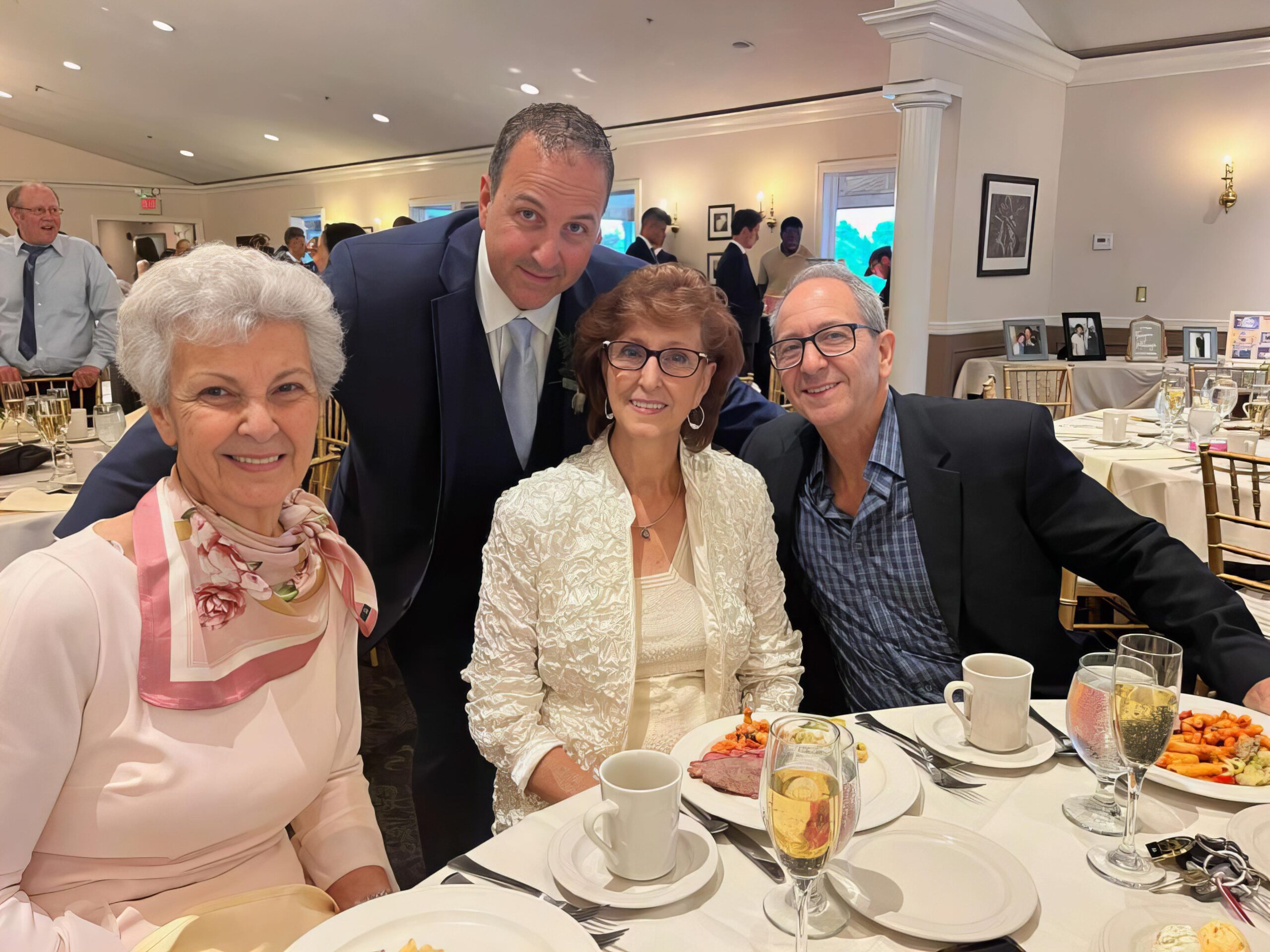
The Wedding
A wedding, a flat tire, and a ride home bring old family tensions into the same car.
Read the story →The wider library · Daniel Robert Mazur
A family wedding. A quiet day on the lake. A dream with too many keys. These stories begin in particular moments and follow the questions that stay with us.
Personal reflection and imaginative storytelling meet here—in stories about belonging, belief, and learning to see another person.
11 illustrated stories · Read freely, at your own pace
Choose where to begin
Browse the collection, follow a theme, or search for a title. Each story opens in the reading area below.
11 stories to explore
A wedding, a flat tire, and a ride home bring old family tensions into the same car.
Read the story →
A medical tower, a blanket, and a bag of keys turn a search for answers into a question about waiting.
Read the story →
A refused handshake becomes a reputation. One friend chooses to trust what she has seen for herself.
Read the story →
Two boats leave the shore. A boy discovers what can be gained by choosing the quieter one.
Read the story →
On a drive after a family wedding, an uncle and nephew talk about attraction, kindness, and character.
Read the story →
A boy punished for lying watches adults conceal the truth—and carries the contradiction into adulthood.
Read the story →
An older writer returns to a youthful poem and follows its questions into a desert landscape.
Read the story →
A softball team brings two women together. Their beliefs test the friendship they build beyond the field.
Read the story →
An atheist and his believing aunt face the distance between doctrine and the care they offer each other.
Read the story →
A delivery driver discovers what lies behind a company’s promises—and asks what an apology requires.
Read the story →
A tiny creature becomes conscious of the world that sustains him, and of the limits of his power within it.
Read the story →Stay with a story
Select a title to read the full story. Open another whenever you’re ready; the collection is always a link away.
Liverpool, New York, welcomed me home with sunshine and temperatures in the eighties. My flight from Miami arrived on time, and I had a week ahead of me: my niece’s wedding, breakfasts and lunches with my mother, and a few days in the town where I had grown up. From Wednesday through Friday, I enjoyed being there. Then came Saturday.
Saturday arrived under an overcast sky. There was plenty of excitement about the wedding, but I was also conscious of the family tensions waiting beneath the occasion. We had come together to celebrate. That did not mean everything between us had been resolved.
“What time do we need to be at the wedding?” I asked my mother as the anticipation built.
“4:30 sharp!” she replied, her voice tinged with urgency given her significant role in the ceremony.
At nearly four, my mother, Aunt Maryjane, and I climbed into Mom’s car. She handed me the keys. The venue was fifteen minutes away, according to my GPS. I started the engine and thought about the fire hydrant at the foot of the driveway. It had stood there since I was ten. I had been steering around it since I first learned to drive.
Mom’s newer car had buttons in place of the gear lever I was used to. After a few days of driving it, I thought I had adjusted. I pressed R, keeping the hydrant in mind.
I released the brake and touched the accelerator without checking behind me or looking at the rearview camera. Then came a loud hiss.
I stopped and got out. The hydrant was intact. The tire was not: a hole in its side had left the wheel resting low on the driveway.
The sound had been escaping air, not water. I was relieved about the hydrant and furious with myself about the tire. We were going to need another way to the wedding.
Instantly, my mother’s phone began to ring. First, it was my brother Paul calling, then my other brother David. Both had apps on their phones that monitored every detail of my mother’s car, alerting them to even the slightest issue. They knew about the flat tire before we did and were calling to check on us.
“Is everything okay?” I heard Paul say as I retrieved the phone from my mother, his voice tense with concern.
“Yes, we’re fine,” I assured him. “Just a flat tire.”
The call brought worse news. The ceremony began at four, not four-thirty. We were already late.
With Mom and Aunt Maryjane growing anxious, I ordered an Uber. The nearest driver was five minutes away. It felt longer.
During the ride to the wedding, I texted Paul every five minutes, updating him on our progress according to my GPS. Meanwhile, my mother, seated in the front, struck up a conversation with the driver, her anxiety channeled into curiosity about his overseas heritage. Her calm demeanor in the midst of our chaos was oddly comforting.
We arrived at the venue at exactly 4:30, the time we had originally planned to be there. But as we knew, we were thirty minutes late. My heart pounded as we hurried inside, fearing the worst.
After the ceremony, Amber, Paul’s wife and mother of the bride, approached me with a smile.
“Other family members from out of town were late too,” she said, her tone reassuring. “The delay worked out for the better.”
I was grateful for the reassurance. The ceremony had worked out despite our late arrival. Getting home, however, brought another complication. The family arranged for Mom, Aunt Maryjane, and me to ride with my brother David and his wife, Dianne. I had not spoken to David in more than a year. At our nephew Jacob’s graduation, I had declined to shake his hand; he had then tried to have me removed from the church.
Despite the tension, we loaded into David’s car and began the journey back to my mother’s house. Dianne, ever gracious, started warm conversations, especially with my aunt, ensuring everyone’s comfort. Gradually, I joined in, though David remained silent.
As we neared our destination, the conversation turned to David’s daughter, Audrey. I learned she hadn’t attended church in years, along with other updates. Dianne noticed my surprise and questioned why I didn’t know these things. Bluntly, I explained, “Since there’s a rift between her father and me, she no longer speaks to me.” David heard me but remained silent.
Dianne already knew about my strained relations with the family, especially with David. As an atheist in a devout Christian family, I faced ostracism based on fabricated stories by my father. Audrey, however, had given me the benefit of the doubt, having never met me and only hearing stories about me when we first met, the week my father died. It was the same week he finally agreed to meet me after decades, introducing me to David’s grown-up family.
I wondered what David made of my answer about Audrey. Did he recognize anything of his own estrangement from me in her silence? Some people call such patterns a generational curse. To me, it was a familiar family division: one unresolved conflict shaping another relationship.
The wedding had brought us into the same room, and the flat tire had put us in the same car. Neither could settle what lay between us. I came away thinking about how easily old accusations become the terms of a new relationship—and how difficult it is to change those terms when no one will speak about them.
In a city of whispers and shadows lived a man named Oliver. Again and again, people told him he was unwell. Their concern began to sound like a verdict, and in time he found himself wondering whether they knew something about him that he could not see.
One day, in a crowded marketplace, Oliver met an old acquaintance, Dr. Emmanuel, who owned a medical center. Emmanuel invited him to come in for an examination. Oliver accepted. He wanted an answer.
When he arrived at the medical center, he found himself in the lobby of a towering building. The directory on the wall indicated that Emmanuel’s office was on the top floor—the penthouse, the pinnacle of the building. The entire structure was dedicated to medical facilities, but the top floor stood out as the most prominent and outstanding.
Before anyone could reach the penthouse, they had to pass through a decontamination machine in the lobby. Scientists known to Emmanuel had designed it to remove whatever illness a visitor might carry upstairs.
Oliver approached the machine and stepped inside, but it remained inert, its power off. He wandered about the lobby, hoping to find someone who could assist him, but the place was eerily deserted. Hours passed, and finally, employees appeared behind the front desk. He approached them, and they promptly turned on the decontamination machine. Oliver entered, feeling a strange mixture of anticipation and dread. The machine hummed to life, enveloping him in a cleansing light.
Emerging from the machine, Oliver felt lighter, as if a burden had been lifted. He took the elevator to the top floor. When the doors opened, he was startled to find himself naked, with only a flimsy blanket to cover him. He fidgeted constantly, trying to keep the blanket in place, but every now and then, parts of his body were exposed, drawing curious glances from the people he passed.
As he navigated through the maze of rooms, he noticed his hands were full of keys—hundreds of them. They were heavy and unwieldy, slipping through his fingers despite his desperate attempts to hold on to them all. Amidst his struggle, he spotted an empty medical bag discarded in a nearby trash can. He retrieved the bag, placing all the keys inside, and continued on his way.
Eventually, he reached the waiting room. It was filled with others who, like him, seemed to be waiting for something, someone. The hours dragged on, and Oliver watched as no one seemed to be called, no one seemed to be helped. The anticipation turned to doubt, and he wondered if he would ever see Emmanuel again.
Around Oliver, people murmured and sighed. He opened the medical bag and looked at the keys. He had so many, yet he had not found the door that would bring him to Emmanuel.
As he waited, Oliver began to think about what he was carrying. The blanket covered his body but never quite relieved his embarrassment. The keys offered possibilities without telling him which one to choose. Around him sat others who had also come looking for help. He could not know what each of them needed; he knew only that they, too, were waiting.
He did not suddenly understand the building, the machine, or Emmanuel’s absence. But he began to notice his own exhaustion: the effort of holding everything, covering everything, trying to be ready for an answer that had not arrived.
Oliver continued to wait. For the moment, he let the bag rest beside his chair and drew the blanket around him. He still wanted to see the doctor. He was beginning to wonder what he might learn before the door opened.
Gregory flew from San Francisco for his nephew Tommy’s high school graduation. The ceremony was being held in the church associated with Tommy’s academy. Families gathered beneath the stained-glass windows, greeting one another and looking for seats.
He arrived early to find places for the family, exchanging nods and smiles as he walked through the church.
As he walked down the aisle, Gregory’s eyes met those of his brother, Francis, stirring memories of unresolved feuds and unspoken grievances. Francis approached, extending his hand in a gesture of reconciliation. Gregory looked at him, and with a mixture of sadness and resolve, said softly, “Why bother now, Francis?” Without expression of anger or resentment, he chose not to extend his hand. The unresolved issues between them made such a gesture feel insincere and hollow.
Francis’s face turned crimson with fury. “How dare you!” he bellowed, his voice echoing through the church and silencing the joyful chatter. “You refuse to shake your own brother’s hand in front of everyone? You disrespect me and this church!” His face contorted with rage as he pointed toward the door. “Get out! You don’t belong here!” he shouted, making a move as if to physically eject Gregory. “Leave now!” he repeated. But Gregory remained still, quietly unmoved by the outburst.
Francis’s wife stood beside him without intervening. After he walked away, she approached Gregory’s mother. Gregory watched, puzzled. The confrontation had been with him, but no one was asking him about it.
The congregation fell silent, all eyes on the unfolding scene. Gregory stood there, feeling the heat of embarrassment creeping up his neck. He wanted to explain the depth of his decision, but the words wouldn’t come. Instead, he stood silently, enduring the torrent of anger with a profound sense of embarrassment—not for himself, but for Francis, who was now a spectacle of unbecoming behavior.
The graduation ceremony proceeded, but the incident remained in the back of Gregory’s mind. He clapped and cheered as Tommy walked across the stage, but the memory of Francis’s outburst lingered.
After the ceremony, as families gathered to take pictures and congratulate the graduates, Gregory noticed that neither Francis nor his wife approached him with an apology. They continued to interact with others, ignoring the earlier confrontation as if it had never happened.
The next morning, Sunday, Gregory attended the morning service at the church before returning to San Francisco the following day. His brother and his wife sat in the row in front of him, their hands raised to the heavens during the psalms, praising with fervor. The service began and ended, and once again, Gregory left the building without receiving any apology for Francis’s behavior the previous day.
Days turned into weeks as Gregory resumed his life in San Francisco. Yet, the incident lingered in his mind, unresolved, much like the initial conflict that had caused him to refrain from the handshake. To Gregory’s dismay, whispers from the church community eventually reached him, revealing not just lingering issues but new ones as well. Francis’s wife had begun to speak to others about Gregory, casting him in a light of unwarranted anger and distrust.
Gregory went on with his life, but the encounter remained unresolved. He had refused a handshake because he did not want to pretend their relationship was whole. Now that refusal seemed to be becoming another story told about him.
In the months that followed, Francis’s wife, Kathy, decided to reach out to Cindy, a long-time friend who had stopped attending the church. She thought she’d call and see how Cindy was doing. During their conversation, Cindy mentioned that Gregory had recently visited.
“Oh, he did?” Kathy responded, her tone sharp. “That Gregory is an angry and bitter man!” she insisted.
Cindy paused, surprised. “Oh really? But he was nothing but kind and respectful when he was here.”
The conversation upset Cindy. She called Gregory to tell him what had happened. When he did not answer, she left a message:
Hey Gregory,
It’s me, Cindy. This morning, I received a call from Kathy, your brother Francis’s wife. Initially, it seemed like a pleasant conversation. I hadn’t seen or heard from her since 1998, so I was genuinely happy she called. We chatted for a while, and then I mentioned your recent visit.
The moment I brought up your name, everything changed. Kathy froze and sounded quite angry and upset. I told her I had read your book and mentioned how respectful and kind you were during your visit. Despite that, she repeatedly insisted you are a very angry man. She wished me well, but it was clear she didn’t want to hear from me again. It was heartbreaking because she had been a good friend when I attended the church.
Gregory, I think you’re a very friendly and kind person. I reminded Kathy of your kindness during your visit, but she didn’t take it well. I just don’t understand, Gregory. I really do like you, and that won’t change. I’ve never seen you angry. I wish Kathy and I could remain friends, but it seems she doesn’t want to because I spoke to you, which is truly sad.
Cindy
Gregory listened with sadness. His father had died three years earlier, and he had hoped the old stories about him might finally lose their hold. Yet reports still reached him from his hometown, carrying the same accusations across the distance to San Francisco.
Gregory sat down, and in the only way he knew to process his feelings, he pulled out his pen and began writing a letter to Cindy:
Dear Cindy,
I write these words for you. Living in San Francisco, I have often been offered special privileges by those I have done business with, privileges I have consistently refused for good reason. I have never desired to be treated differently—neither better nor worse—than anyone else. My deepest wish has always been to be judged fairly and solely on the merits of my actions, to be truly seen and understood for who I am and what I have genuinely done. This principle is no coincidence; it is a deeply held conviction shaped by a lifetime of experiences and reflections.
Recently, I reached out to several people from my past, including the church pastor and Brother Davey. In our conversations, their responses were not shaped by our interactions but by a reputation fabricated long ago designed to isolate me from my family and others. Davey dismisses my words, especially those concerning people who have been harmed, insisting my claims are mere hearsay. Yet, with profound irony, it is the hearsay about me that he clings to, refusing to judge me by my actions or our direct interactions. Instead, he relies on the distorted reputation that precedes me, using it as a misguided roadmap for any future interactions.
When I heard your voice recounting Kathy’s accusation of me being an angry man and then heard your judgment of me—simply stating how I had been with you, respectful and kind—it was what I’ve craved for decades. Your words didn’t treat me better or worse but as I am, based on your own perception and not the distorted memories others have imposed.
As I wrote in Chapter 12 of my book, “The Family Divide,” when my aunt’s reputation was under attack: “Lost in my thoughts, a chuckle escaped my lips—a ripple of laughter born from the absurdity of entertaining my father’s outlandish statement as anything but fiction. Throughout my life, I had witnessed an unwavering display of love and care emanating from my dear aunt, leaving no room for doubt or suspicion.” I based my beliefs and eventual treatment of my aunt not on hearsay or innuendo but on my past and current experiences with her.
Thank you, Cindy. To many, being spoken about truthfully may not seem significant, but given my past—an environment you are familiar with—your words are extraordinarily rare and precious. The words you spoke about me were genuine and based on actual events, which is all I’ve ever hoped for from anyone. Your acknowledgment of my true character, grounded in your personal experience, has given me a profound sense of validation. I will cherish this moment deeply, as it reflects the fairness and truth I’ve longed for.
Warm regards,
Gregory
Gregory folded the letter and placed it in an envelope. Cindy had offered something he could not obtain by arguing with a rumor: an account of him grounded in her own experience.
He kept returning to the reversal at the center of the encounter. Francis had shouted, yet Gregory was being described as the angry one. Brother Davey dismissed Gregory’s concerns as hearsay while accepting other people’s accounts of Gregory. He wondered how anyone could challenge a reputation when each attempt to speak was interpreted through it.
He could not know what moved each person to repeat those stories. He could recognize their effect: they allowed an inherited judgment to stand in for a conversation.
He sealed the envelope. The letter would not settle the conflict with Francis, but it would tell Cindy why her willingness to speak from experience mattered. For once, the story reaching him had made room for the person she had actually met.
At sunrise, three brothers helped their father and grandfather load fishing gear into two boats. It was a familiar outing, and the boys were already looking forward to a day on the lake.
Their father’s boat was sleek and well equipped, with fish finders and downriggers the boys were eager to use. They admired him and wanted to be near him. Before long, all three had climbed aboard.
Their grandfather’s smaller boat was steered from a seat beside the motor. He had grown up on a farm and worked in a steel mill. He spoke little, but he was always glad to be with his family.
One of the boys glanced back. Grandpa was still beside his boat, preparing to go out alone. He had not asked anyone to join him. The boy looked from his two brothers to the empty place in the smaller boat.
Moved by a deep sense of duty and love, the boy stepped out of his father’s boat and walked over to his grandfather. “Grandpa, can I fish with you today?” he asked, his voice trembling slightly.
“I’d love that,” Grandpa said. His face brightened.
The two boats set off across the waters, the boy and his grandfather in the simpler vessel, trailing behind the faster, more advanced one. As they glided over the lake, the boy’s initial eagerness to be with his father began to wane. He realized that his two brothers would be all the company his father needed, freeing him to embrace an unexpected and different experience.
In Grandpa’s boat, a tangled line could be untangled. A lost lure did not have to spoil the morning. The boy settled into the slower pace.
At their fishing spot, Grandpa helped him set his line. They cast into the still water and waited. For a while, there was only the sound of birds and the occasional splash.
The boy asked about the farm, and Grandpa began to talk. One story led to another. Soon they were recalling earlier outings, laughing over small mishaps the boy had almost forgotten.
As the sun began its descent, painting the sky in hues of orange and pink, they returned to shore with their modest catch. The other boys and their father had hauled in a significant number of fish and were boastful about their success. But the boy who had fished with his grandfather didn’t seem to notice or care.
The boy was glad of their catch, but it was the conversation he carried home. He had learned things about his grandfather that he would never have heard from the other boat.
He did not know how to explain that to his brothers. They had enjoyed their day too. He only knew that, when he looked back that morning, he had noticed an empty place—and that taking it had changed the day for him.
Some experiences resist comparison. The number of fish could be counted; the hours with Grandpa could not be measured in quite the same way.
Years later, after his grandfather was gone, he could no longer remember how many fish they caught. He remembered the boat, the pauses between stories, and how pleased Grandpa had been when he asked to come along.
Michael had traveled to Ashford for his niece Emily’s wedding. For a day, the family’s attention rested on flowers, vows, music, and the pleasure of seeing people who usually lived far apart.
Emily married in a garden. Later, beneath a canopy of lights, she and her new husband danced while the guests gathered around them.
By the following morning, the celebration had become a collection of shared memories: a conversation at dinner, a favorite song, someone laughing across a table.
Emily’s brother Liam moved easily among the guests. Beside him, their younger brother Ethan was quieter, listening more than he spoke. At seventeen, he was still working out what he wanted from relationships and what to make of the attention appearances received.
The day after the wedding, the family decided to visit some friends at a nearby camp. The sun bathed the landscape in a warm, golden glow, casting a serene light over the emerald hills and shimmering river. It was the perfect setting for a leisurely drive and a chance to unwind after the festivities. On their way back, Michael found himself in Ethan’s sleek sports car, the two of them savoring the freedom of the open road as they headed to an ice cream parlor.
On the drive back, Michael asked Ethan what he thought made someone attractive.
Ethan considered the question for a moment, keeping his eyes on the road.
“Kindness, I suppose. Intelligence,” he said. “Looks might get your attention, but they don’t tell you much about the person.”
“That’s close to what I was thinking,” Michael said. “Can I tell you a story?”
“Sure,” Ethan said.
“I think attraction changes as you get to know someone,” Michael said. “The way they listen. How they treat you when things aren’t going well. What they do when there’s nothing to gain.”
As they cruised along, Michael decided to share a story that would illustrate his point with a touch of intrigue.
“Let me tell you about a young man named David,” he began, his voice carrying a gentle yet compelling cadence. “David was handsome and charismatic, the kind of guy who effortlessly drew people in. Women were naturally attracted to him, and he basked in their attention. But beneath the surface, David felt a gnawing emptiness that no amount of admiration could fill. One day, fate introduced him to a woman named Sarah.”
“Sarah didn’t draw the same attention David did. But he found himself wanting to talk to her again. She was comfortable with herself, and she paid attention to what he said.”
“She was intelligent and kind, but she wasn’t trying to impress him. She treated other people with the same consideration she gave him. Gradually, he began to notice how different he felt around her: less concerned with performing, more able to be himself.”
“As they grew closer, what drew him to her was harder to separate into looks and character. He liked her face because it was hers. He trusted her because he had seen how she behaved.”
Michael paused. Ethan was still listening.
“That’s what I mean,” Michael said. “You can notice someone in a moment. Knowing whether you feel safe and understood with them takes longer.”
Ethan nodded. “I suppose you have to give yourself time to find out.”
As they arrived at the ice cream parlor and joined the rest of the family, Ethan watched the interactions around him with a keen eye, recognizing the true beauty in those who treated others with love and kindness. He realized that his sister Emily, although physically beautiful, also possessed the quality of good character, which made her truly radiant.
Reflecting on Emily’s wedding the day before, Ethan vividly recalled the moments that highlighted her exceptional character. Emily had always been the one to offer a helping hand, to listen without judgment, and to support those she loved unconditionally. Her kindness and compassion had shone brightly during the wedding preparations and the ceremony itself, making her inner beauty evident to all. From calming last-minute jitters to ensuring every guest felt welcome, Emily’s genuine warmth touched everyone around her.
Later, Ethan returned to the conversation. “I was thinking about Emily,” he told Michael. “People talked about how beautiful she looked yesterday. But I keep remembering how she made everyone feel welcome.”
“Then you were noticing more than the dress,” Michael said.
Ethan smiled. He had no complete answer to Michael’s question, but it had changed what he was paying attention to.
As the school year ended in Elmswood, Brandon and his friends began making plans for summer. Alex and Jenny wanted to explore the woods and ride into town. Waiting another week felt unnecessary. They decided to skip school.
They invented excuses and managed to deceive Mr. Thompson, their homeroom teacher. For a few days, the plan worked. They rode the trails, found lakes they had never visited, and returned home with stories they could not tell their parents.
One particular afternoon, after Brandon had sneaked out earlier that day, his father, Mr. Harris, went into the backyard, examining the trees with a discerning eye. He needed just the right branch—a flexible one that wouldn’t break easily. Spotting a promising candidate, he broke off the branch and took it to his workshop. There, he meticulously sanded it down, crafting it into a perfect switch. It was a task he undertook with grim determination, believing it necessary for a harsh and brutal lesson.
That evening, as Brandon returned home, he found his father waiting on the porch. The sun was setting, casting a long shadow that seemed to mirror the impending doom Brandon felt in his chest. “How was school today, son?” Mr. Harris asked, his voice calm but eyes piercing.
Brandon, confident in his lies, replied, “It was fine, Dad. Just the usual stuff.”
Mr. Harris’s gaze didn’t waver. “Got a phone call this morning. Your school hasn’t seen you all week. Care to explain?”
Brandon’s heart pounded. The web of lies he had spun was unraveling. He tried to think of an excuse but knew it was futile. “I’m sorry, Dad. We… we just wanted to have some fun before summer.”
Mr. Harris’s face darkened, his voice low and menacing. “Skipping school is bad enough, but lying to me is worse. The worst thing a man can be is a liar.”
Without warning, Mr. Harris reached under the chair and pulled out the switch he had crafted with such grim determination. Brandon’s eyes widened in terror as he instinctively bolted for the door. But his father was ready, and with a single swift movement, the door was locked, trapping Brandon inside.
The beating was brutal. Mr. Harris’s face contorted with anger, his eyes shut tight as he swung the switch with relentless fury. Blood blisters rose on Brandon’s skin, each lash searing with unbearable pain. He screamed for mercy, but his father’s rage was unyielding.
When it was over, Brandon limped to his room, tears mingling with the sweat on his face. The cuts on his body were so severe that lying down was impossible. He sat up in bed, trying to keep his wounds from touching the blanket and mattress. The pain was too intense to allow any rest, and the night stretched on, filled with silent sobs and the unending torment of a young boy’s broken spirit.
The next morning, Brandon donned a long-sleeved shirt with buttoned wrists and long pants instead of shorts to hide his injuries. He made sure to skip gym class. The summer days that had once been filled with joy and exploration now seemed dark and suffocating. Brandon’s friends noticed the change in him. He was quieter, more withdrawn, and the spark in his eyes had dimmed. Alex and Jenny tried to reach out, but Brandon was too consumed by fear and shame to let them in.
That afternoon, Brandon remembered his appointment with the principal and his father. Anxiety gnawed at him, twisting his stomach into knots as he approached the principal’s office. The hallway seemed to stretch endlessly, each step heavier than the last.
As Brandon entered the office, he nervously lifted his arm to adjust his sleeve. In that moment, Mr. Johnson, the principal, noticed the slashes on Brandon’s forearm where the sleeve had opened, the marks stark and raw against his pale skin, as if crying out for attention. “What happened to you, Brandon?” Mr. Johnson asked, his voice heavy with worry.
Brandon opened his mouth to repeat the lie he had been telling his friends, but his father’s hand on Mr. Johnson’s knee silenced him. “Brandon fell off his bike. Do I make myself clear?” Mr. Harris’s voice was calm but firm, leaving no room for argument.
The principal looked from Brandon to his father. His concern was visible, but he did not challenge the explanation. The meeting ended without another question about the marks.
Brandon’s schoolwork was suffering. His mind was often clouded by fear and confusion, and the pain from the previous night made it even harder for him to focus. He had never been a stellar student, partly because his father often spoke harshly about the public school system. Mr. Harris’s strict Christian beliefs led him to view the world through a lens of impending doom, frequently proclaiming that the end days were near. This nihilistic outlook made Brandon question the value of his education. Why bother with school if the world was ending soon?
Desperate for some solace, Brandon approached his mother, hoping for understanding and support. “Mom, I need to talk to you,” he began one evening, his voice trembling.
His mother looked at him with concern. “What is it, Brandon?”
“It’s about Dad,” Brandon said, hesitating. “He beat me for lying… but he lied to the principal about what happened.”
His mother sighed deeply, her eyes filled with a sadness Brandon couldn’t fully comprehend. “Your father… he’s had a difficult life, Brandon. When he was a child, his father was a drunk. He used to have to go to the bar late at night to bring him home. Your grandfather would beat him too.”
Brandon frowned, frustration boiling within him. “But Dad is a counselor, responsible for teaching others how to live their lives. How can he do that if he acts like this? How can he preach honesty and integrity while denying what he did to me and escaping responsibility for his actions?”
His mother’s gaze softened, but her words offered little comfort. “People are complicated, Brandon. Your father believes he’s doing what’s best, even if it’s not always right. He’s trying to teach you discipline in the only way he knows how.”
Brandon’s frustration turned to anger. “Excusing his behavior doesn’t help, Mom. What he’s doing is wrong, and you’re just letting it continue.”
His mother’s silence was all the answer he needed. The excuses continued, unresolved, and Brandon’s sense of betrayal deepened.
Mr. Harris was resolute in his beliefs and practices. He never attempted to address the issue again, nor did he allow the family to discuss the past. He was firm in his conviction that such matters were best left to wise men to resolve, believing that others, including his own family, talking about such things would only encourage rumor and gossip.
The relationship between Brandon and his father continued to deteriorate. Mr. Harris’s strict rules and harsh punishments created a chasm between them. Brandon longed for a chance to speak his mind, to tell his father how he felt, but Mr. Harris’s philosophy was clear: children should be seen and not heard.
As summer turned to autumn, Brandon immersed himself in his hobbies and dreams of one day starting his own business and achieving independence, determined to escape the suffocating environment at home. He found solace in books and movies, losing himself in stories of faraway places and lives different from his own.
Years passed, and the distance grew. Brandon carried questions his father would not discuss. Mr. Harris maintained his stern manner, leaving Brandon unable to tell whether anything beneath it had changed.
One winter evening, as snow fell softly outside, Brandon sat by the window, lost in thought. He was now a young man, on the cusp of adulthood, and the memories of that fateful summer still haunted him. The scars on his body had faded, but the emotional wounds were still raw.
Mr. Harris entered the room, his expression unreadable. “Brandon, we need to talk.”
Brandon looked up, his heart pounding. “About what?”
Mr. Harris sighed, his voice heavy with unspoken words. “You need to start helping out around the house like everyone else. If you can’t, then you’ll have to leave.”
Brandon felt a surge of frustration and sadness. “Dad, I’ve tried to help. I even offered to pay for the new roof, but you dismissed it as just talk.”
Mr. Harris’s face hardened. “Talk is cheap, Brandon. Actions matter.”
Hurt and anger welled up within Brandon. “Maybe it would be best if I left. If I’m unwanted here, I need time to think about it.”
Mr. Harris’s eyes flashed with anger. “You need time to think if you should help out around here?”
“No,” Brandon replied, “I need time to think if I should stay where I’m not wanted.”
“Fine then,” Mr. Harris snapped. “You have a week to find a place to live.”
That night, Brandon packed his belongings and left home. As he walked away from the house, the cold winter wind biting at his face, he felt a mix of relief and sorrow. He knew he needed to find his own path, away from the suffocating environment of his father’s house.
Years turned into decades as Brandon navigated the world on his own. He built a life for himself, starting his own business as he had always dreamed. Yet, the memories of his childhood and the unresolved conflicts with his father lingered in his mind. He often found himself reflecting on the past, contemplating the possibility of reuniting with his father and family.
Brandon sought therapy, read about forgiveness, and tried meditation. He wanted relief from the anger and pain, but understanding them did not make them disappear. He also began to distinguish letting go of an argument from pretending that what happened had been acceptable.
His mother’s account of his father’s childhood stayed with him. It helped him understand how violence could be passed along as discipline. That understanding did not excuse it. It did make him wish they could speak honestly about what both of them had lived through.
One autumn day, Brandon decided it was time to reach out. He wrote a heartfelt letter to his father, expressing his feelings and his desire for reconciliation. He shared his journey of reflection and growth, and his hope for a future where they could rebuild their relationship.
Months passed before Brandon received a response. It was a simple letter from his father, acknowledging only his own pain. It ended with four words that would haunt Brandon for years: “I’m not ready yet.” This mantra persisted year after year, with every request for reconciliation, preventing them from ever meeting to work through their troubled past.
Brandon continued to reach out, but the answer did not change. He built a business, friendships, and a life beyond the house he had left. Still, “I’m not ready yet” marked a door he could not open from his side.
Late one afternoon, Elias sat in his study with an old journal on his knee. He had recently published a memoir, but the pages in front of him belonged to a much younger writer: poems, unfinished thoughts, questions he had not yet learned to ask plainly.
One quiet afternoon, Elias found himself leafing through an old, weathered journal he had kept as a young man. Within its pages were poems he had written in his youth, raw and unpolished. He smiled wistfully at his younger self’s attempts to capture the turmoil and confusion of growing up. One poem, in particular, caught his eye: “Prodigal Son?”
Elias read the poem aloud, his words transporting him back to the moment he first wrote them:
“Searching for my identity, not knowing who I should be.
Silenced by the maker’s lips, not old enough to sail my ship.
That time has passed; my youth is gone; I’m smarter now but something’s wrong.
The maker says that it’s okay, but no one smiles like yesterday.
The castle’s built king at its throne, don’t want to be a prince told to leave when I’m grown.
The pain begins, my feelings strong, I only know where I don’t belong.
Hello mother, hello brother, would you see me if you could?
God is great, God is good, but we don’t think that we should!
That’s okay, that’s all right, because now I know what’s wrong and right.
And if you think I’m the prodigal son, tell me your troubles and see if I run.”
Reading aloud brought back the weight of his father’s expectations and the rejection that followed. The younger voice was still there: angry, lonely, searching for somewhere to belong.
Elias took up his pen. He wanted to return to the poem through a story, giving its questions a landscape and its younger speaker room to move.
In the oasis town of Miraj lived a young man named Elias. Traders crossed the desert to reach its markets, carrying goods and stories from places he had never seen. His family was prosperous, respected, and certain of the traditions that had secured its place.
“Searching for my identity, not knowing who I should be.”
Elias grew up in the grand courtyard of his family’s estate, a sprawling residence with lush gardens fed by the oasis springs. His father, a revered elder and successful merchant, was the undisputed head of the household. From a young age, Elias was groomed to inherit his father’s responsibilities, to uphold the family’s honor and traditions. But beneath the surface of his privileged life, Elias felt a deep, unspoken yearning for something more.
“Silenced by the maker’s lips, not old enough to sail my ship.”
The vibrant streets of Miraj were filled with the sounds of haggling merchants, the scent of exotic spices, and the laughter of children playing in the alleys. Yet, within the walls of his family’s estate, Elias felt the weight of expectation. Whenever he dared to voice his dreams of exploration and adventure, his father’s stern gaze would silence him. Elias learned to suppress his desires, feeling too young and dependent to defy his father’s will.
Years passed, and Elias grew into a capable young man. He mastered the craft, earned respect, but the unease within him only deepened. Wisdom and skill came with age, but they brought no peace.
“That time has passed; my youth is gone; I’m smarter now but something’s wrong.”
His father, the maker of his fate, often assured him that everything was as it should be, that he was on the right path. Yet, Elias saw a change in the townsfolk—smiles that once greeted him were now tinged with a distant sadness, a sense of lost camaraderie.
“The maker says that it’s okay, but no one smiles like yesterday.”
The family’s estate, a symbol of their status and faith, felt like a prison to Elias. He was expected to take his father’s place one day, to lead with the same unwavering adherence to tradition. But Elias yearned for something different, something more.
“The castle’s built king at its throne, don’t want to be a prince told to leave when I’m grown.”
One fateful evening, after yet another clash with his father over his future, Elias found himself with no choice but to leave. Feeling betrayed and dishonored, his father banished him from the family home, declaring him unworthy of their name and legacy.
“The pain begins, my feelings strong, I only know where I don’t belong.”
Elias wandered the desert, grappling with the pain of rejection and the uncertainty of his new path. The endless sands mirrored his internal turmoil, but he knew he could not return to the life he had left behind.
“Hello mother, hello brother, would you see me if you could?”
Desperately seeking connection, Elias reached out to his mother and brother, hoping they would understand his plight. However, his father’s strict interpretation of their faith demanded they shun him, viewing his departure as a test of their own loyalty and righteousness.
“God is great, God is good, but we don’t think that we should!”
Through the harsh lessons of solitude and survival in the desert, Elias began to see the truth. The rejection by his family, though painful, taught him about the rigid limitations of blind tradition. He started to discern his own values, recognizing what was truly right and wrong.
“That’s okay, that’s all right, because now I know what’s wrong and right.”
Elias refused to be seen as the prodigal son who left his family for selfish reasons. His journey was one of self-discovery and moral clarity. He knew that, unlike his family, he would never abandon those in need. His experiences had shaped him into a compassionate and steadfast individual.
“And if you think I’m the prodigal son, tell me your troubles and see if I run.”
Elias made a life beyond Miraj. He still hoped his family might one day hear him, but he could not make that the condition of his own life. When someone came to him with trouble, he tried to remain. It was the answer he could give to the last line of his poem.
Elara’s cleats pressed into the infield dirt as she stretched for the first practice of the season. She had moved from Ohio five years earlier to work in logistics at an Amazon warehouse. Zia worked in picking and packing in the same building, but they had never met. The new employee softball team finally brought them onto the same field.
The company had decided to start a softball team to bring employees together, and Elara, a logistics coordinator, and Zia, a general laborer, both jumped at the chance. Their shared love for the game, honed during their high school years, brought them to the field that day.
As they practiced, Elara noticed the other woman’s swift, confident movements. Wanting to break the ice, she called out, “Hey there, I’m Elara. Looks like we’re going to be teammates.”
The woman looked up and smiled, her brown eyes glinting with excitement. “Nice to meet you, Elara. I’m Zia. Ready to show these folks how it’s done?”
Elara laughed. “Absolutely!”
Their initial interactions were light and fun, filled with jokes about missed catches and impressive hits. After practice, the team often went out for dinner. Elara and Zia quickly became inseparable, their contrasting personalities complementing each other. Elara was methodical and detail-oriented, a trait that served her well in logistics. Zia, on the other hand, was spontaneous and energetic, thriving in the fast-paced environment of picking and packing.
“So, what’s it like in logistics?” Zia asked one night over a shared plate of nachos.
“It’s a lot of planning and spreadsheets,” Elara replied, grinning. “But I love the challenge. What about you? Your job must be pretty intense.”
“It is,” Zia admitted. “But I love staying active. Beats sitting behind a desk all day.”
They laughed, clinking their soda glasses together. Over time, their conversations grew deeper, exploring their backgrounds and beliefs.
One evening, after a particularly grueling practice, the team gathered at a local bar. Elara and Zia found a quiet corner, the dim light casting soft shadows on their faces as they started talking about their lives outside work.
“I was raised Catholic,” Elara said, twirling her straw in her drink thoughtfully. “Went to church every Sunday with my family. Since moving here, I haven’t really found a church that feels like home, though.”
Zia’s eyes widened with genuine interest. “Catholic, huh? That’s interesting. My family never went to church. Religion wasn’t part of my life until a friend invited me to her church’s Friday service. It completely changed everything for me.”
Elara leaned in, sensing the depth behind Zia’s words. “What happened that Friday?”
Zia took a deep breath, her eyes reflecting a mix of past pain and present peace. “Before that night, my life was a mess. I was diagnosed with manic depression, and I had a serious drinking problem. I felt completely lost and hopeless. But that night, something changed. As I listened to the sermon and felt the warmth of the congregation’s support, I experienced something I can only describe as a divine intervention. I found God, Elara. He lifted the weight off my shoulders, and I felt a profound sense of peace and purpose. I turned my life around. I quit drinking, and my depression became manageable. I believe with all my heart that what God did for me, He can do for others. I’ve found the true God, and now I feel it’s my mission to help others find Him too.”
Elara nodded, deeply moved. “That’s incredible, Zia. I’ve always admired people with strong faith.”
As their friendship deepened, so did their conversations about faith. One night, after a close game and a celebratory dinner, the topic came up again, more charged with the undercurrents of their growing bond.
“You know, Elara,” Zia began cautiously, her voice tinged with the urgency of her convictions, “I’ve always felt that Catholics aren’t true Christians. They pray to Mary and the saints, which isn’t biblical.”
Elara felt a surge of irritation but kept her tone calm. “I was taught to respect Mary as the mother of Jesus and the saints as examples of faith. It’s about seeking their intercession, not worshiping them.”
“But the Bible says we should only pray to God,” Zia insisted, her eyes pleading for understanding. “Jesus is the only mediator.”
Elara sighed, trying to bridge the growing chasm between them. “Well, what’s truly important, what really matters anyway is being a good person and following my conscience. That is what matters most.”
Zia shook her head, her passion unyielding. “It’s not enough, Elara. You need to follow the Bible exactly as it’s written.”
Despite their growing bond, the tension between their beliefs began to strain their friendship. Zia, passionate about her newfound faith, felt compelled to convince Elara to see things her way. Elara, however, was growing tired of constantly defending her beliefs.
“Zia, I respect your passion, but these debates are wearing me out,” Elara said one evening after a particularly heated discussion. “Can we agree to disagree?”
Zia frowned. “I just don’t want you to be led astray.”
Elara’s eyes flashed with frustration. “I’m not led astray. I’m living my life the best way I know how.”
The team had just clinched a crucial victory, and everyone was riding high as they made their way to their favorite diner. Elara and Zia settled into their usual booth, but it wasn’t long before their conversation once again veered towards the topic of religion.
“Zia, I’ve had enough,” Elara said, her voice quivering with a blend of frustration and sorrow. “We’re friends, but these arguments are tearing us apart.”
Zia’s eyes widened in surprise. “I just want to help you understand the truth.”
Elara shook her head slowly. “Your truth isn’t mine, Zia. I need you to accept that.”
Unbeknownst to them, another teammate, Thalia, had been eavesdropping on their argument. She had witnessed the growth of their friendship and now watched with a heavy heart as it threatened to unravel. Steeling herself, she decided to step in. Her face set with determination, she approached their table.
“Mind if I join you two?” Thalia asked, pulling up a chair without waiting for an answer. “I’ve overheard bits and pieces of your conversation, and I think I might be able to offer some insight that could help.”
Elara and Zia exchanged surprised looks but nodded.
Thalia leaned in, her expression serious yet compassionate. “Look, I’ve been on both sides of these debates. They can get intense and painful. But let’s try to see this from another perspective.”
“What perspective?” Zia asked, her tone defensive.
Thalia took a deep breath. “I’m not here to dictate what you should believe. But sometimes, holding tightly to our own views can prevent us from understanding others. Elara has her faith, and you have yours. The real question is, can you respect that about each other?”
Zia frowned, her brows furrowing. “It’s not that simple. Faith is about truth.”
“Your experiences matter to you,” Thalia said. “And Elara’s matter to her. Neither of you has to give up a belief to listen. Can you leave room for a friendship without making agreement its price?”
Elara looked at Zia, tears welling up in her eyes. “I just want us to be friends without these arguments.”
Zia’s expression softened, her eyes reflecting a mix of sadness and stubborn resolve. “I can’t just ignore what I believe and know to be true.”
“I’m not asking you to ignore it,” Elara said quietly. “Just to accept that we might see things differently and still care about each other.”
Thalia nodded, her gaze shifting between them. “Respect doesn’t mean agreement. It means valuing the person, even if you don’t see eye to eye on everything.”
The conversation continued late into the night, with Thalia trying to mediate between Elara and Zia. But the damage had been done. The tension lingered, unspoken but palpable, and their interactions grew more strained with each passing day.
A few weeks later, after a particularly intense game and another heated argument, Elara felt a heaviness in her chest that she could no longer ignore. The tension had been building, and she knew it was time to face the inevitable. Taking a deep breath, she turned to Zia, her voice trembling with a mixture of sadness and resolve.
“Zia, I think it’s best if we keep our distance. This isn’t working. I can’t keep doing this,” Elara said, her eyes filled with a deep sorrow that mirrored the turmoil in her heart.
Zia’s eyes filled with tears, the weight of Elara’s words crashing down on her. She had hoped they could find a way to bridge the gap between their beliefs, but now she saw the reality they faced. “Maybe you’re right,” she whispered, her voice breaking.
They continued to play on the same team, speaking when the game required it. The easy conversation that had once followed them off the field was gone.
Elara immersed herself in her work, finding comfort in the structure and predictability of her job. She leaned on other friendships, seeking the support of those who didn’t challenge her beliefs so fiercely. Yet, a lingering sadness remained, a sense of loss that she couldn’t shake. The joy she once found on the softball field was now tinged with the bittersweet memories of what had been.
Zia, on the other hand, delved deeper into her faith, seeking comfort in her church and the community she found there. She prayed for Elara, hoping that one day they might find common ground. But her prayers were also for herself, for the strength to accept the loss of a friend and the wisdom to navigate the complexities of human relationships.
Thalia watched from the sidelines. She had believed a careful conversation could help them, but she could not decide what either woman was willing to accept. Respect was something they would have to practice themselves.
The softball program had introduced people who might otherwise have remained strangers. It could give Elara and Zia a shared place to begin; it could not tell them how to protect what grew there.
As the season continued, they still knew where the other would be on the field. Outside the game, they no longer knew how to reach one another.
Both had wanted a friendship. Zia also wanted Elara to share the faith that had helped her; Elara wanted her own judgment to be accepted. The difference between those wishes had become more than either could carry.
Thalia did not abandon her hope that people could learn to understand one another. She had learned that offering a bridge was different from being able to make someone cross it.
Tommy grew up in a household where faith was the foundation of every conversation, decision, and relationship. His parents, devout Christians, had a strict interpretation of their beliefs, often quoting key scriptures to emphasize their understanding of salvation and eternal life. One of the most frequently cited verses was John 3:16-18, which reads, “For God so loved the world that he gave his one and only Son, that whoever believes in him shall not perish but have eternal life. For God did not send his Son into the world to condemn the world, but to save the world through him. Whoever believes in him is not condemned, but whoever does not believe stands condemned already because they have not believed in the name of God’s one and only Son.” This passage was the cornerstone of their faith, underscoring the belief that eternal life in Heaven was granted through faith in Jesus Christ, while disbelief led to condemnation.
Another verse that his parents often referenced was John 14:6, where Jesus declares, “I am the way and the truth and the life. No one comes to the Father except through me.” This reinforced their conviction that belief in Jesus was the sole path to salvation and that other paths were false and led away from God.
Additionally, they would refer to 2 Thessalonians 1:8-9, which warns, “He will punish those who do not know God and do not obey the gospel of our Lord Jesus. They will be punished with everlasting destruction and shut out from the presence of the Lord and from the glory of his might.” This scripture painted a vivid picture of the consequences of disbelief, reinforcing the stark dichotomy of Heaven and Hell in their worldview.
From a young age, Tommy internalized these teachings. He grasped the criteria for salvation and the severe consequences of disbelief. However, as he grew older, he began to notice contradictions between his family’s professed faith and their actions. His parents’ refusal to associate with people from different churches or those outside their faith seemed harsh and unloving to him. Rumors and accusations about his extended family led to estrangement from cousins and relatives who had once been central figures in Tommy’s life. This insular approach troubled Tommy deeply.
His community, filled with Christians attending different churches, was dismissed by his family as not being true believers. However, Tommy saw kindness and compassion in many of these people, whom his family must have viewed as some sort of threat to their salvation. This sparked a profound inner struggle within him. How could people who appeared good and kind be seen as needing to be avoided simply because they held different beliefs, attended a different church, or expressed the same beliefs differently?
Driven by this internal struggle, Tommy began to research other religions. He explored various faiths, including different denominations within Christianity. What he found was a mosaic of beliefs, often contradictory, but each emphasizing virtue and compassion at their core. The more he learned, the more he questioned the exclusivity of his family’s beliefs. If all these religions had elements of truth and benevolence, could any one of them claim absolute truth?
This journey led Tommy to a pivotal realization: perhaps none of these religions held the ultimate truth. He began to see them as man-made constructs, each with its own interpretation of virtue and the divine. Embracing this perspective, Tommy chose to live by the principles that resonated with him, irrespective of religious dogma. He believed in the inherent worth of people from all walks of life and sought to build relationships based on mutual respect and understanding, regardless of their specific religious beliefs or lack thereof.
When his family noticed his changing beliefs and actions, they reacted with palpable disapproval. Conversations around the dinner table became tense, with his parents often launching into fervent sermons, hoping to reclaim Tommy’s wavering faith. His mother would sigh deeply, her eyes filled with a mix of sadness and frustration, while his father grew increasingly stern and unyielding. Tommy’s siblings began to distance themselves, whispering behind closed doors about his “rebellious” nature.
The atmosphere at home became suffocating, each day marked by awkward silences and passive-aggressive remarks. Family gatherings, once filled with laughter and camaraderie, turned into battlegrounds of ideology. Tommy’s questions about different beliefs and his expressions of doubt were met with cold stares and admonishments to “pray harder” and “seek God’s guidance.”
Then, one day, not long after Tommy’s shift to a more atheistic stance became evident, his father took a drastic step. He announced that they would cut ties with Tommy’s grandparents and aunt, who had always shown nothing but kindness and love to him and others. This decision was delivered with an air of finality, as if it were a divine decree.
Tommy was stunned. His grandparents and aunt had been pillars of support, their home a refuge of warmth and acceptance. When he approached his father to question the reasoning behind this harsh decision, seeking a valid justification beyond their differing beliefs, such as harm caused or a grievous wrongdoing, he was met with a chilling response. “They are not following the will of God,” his father said, his tone brooking no argument. “We must stay true to our faith.”
This explanation was insufficient for Tommy. He saw no logic in severing ties with loved ones who had done no wrong. For refusing to disown his grandparents and aunt without valid justification, Tommy found himself facing an ultimatum. His mother and siblings, swayed by his father’s unwavering stance, chose to stand with the family’s patriarch. Tommy, holding firm to his convictions, was thus disowned by his parents and siblings.
This estrangement took a profound toll on Tommy, both emotionally and physically. He became severely ill, yet his family remained distant, showing no concern for his well-being. Their lives continued as normal, going about their daily business without regard or care for insight into what ailed their brother, their son. It wasn’t that they never visited him in the hospital; rather, on critical occasions when doctors insisted on discussing his condition, they refused to participate in the conversations, citing their religious conviction to believe and move in alternative directions instead.
In stark contrast, his grandparents and aunt were there for him, anxiously following the recommendations of the medical professionals and offering unwavering support. Through their care and dedication, Tommy began to recover. Over time, and mostly due to their show of unconditional love and support, Tommy was able to rebuild his life.
As the years passed, Tommy grew close to his aunt, who, despite being ousted from the church his parents attended, still held onto some of its core beliefs and began attending another church—one his parents likely deemed inferior. One of the convictions she maintained was the principle professed in John 3:16: “For God so loved the world that he gave his one and only Son, that whoever believes in him shall not perish but have eternal life.” This scripture remained a cornerstone of her faith, and she believed deeply in the promise of salvation through Jesus Christ.
Tommy, now identifying as an atheist, found it increasingly difficult to reconcile his family’s beliefs with his own experiences and understanding. He had spent years grappling with the contradictions he observed within his family’s faith and the broader spectrum of religious beliefs he had explored. The notion that one’s eternal fate hinged solely on belief in a specific doctrine seemed overly simplistic and unjust to him. What about those who simply claimed not to know, who admitted to not having the answers? According to his family, and others who shared their beliefs, you must claim not only to know but also to make the correct decision—or face eternal punishment by torture.
This rigid worldview troubled Tommy deeply. He pondered the nature of such a God. What kind of deity would create such a system? If there was a God, and He was not just, why should Tommy follow Him? Should he do so simply to avoid Hell? Should he do so for the reward of Heaven? And if either reason were valid, what about all the other scriptures in the Bible that say these are both the wrong reasons for doing things—out of fear of punishment or desire for reward—but not for reasons of virtue and honor?
As Tommy delved deeper into his thoughts, he found himself questioning more than just his family’s beliefs. He reflected on the many conversations he had with people from various backgrounds. There was the kind-hearted Buddhist he met at a retreat, who spoke of compassion and inner peace. There was the Muslim client who, during Ramadan, shared his food with the homeless, embodying generosity and selflessness. There was the Jewish friend who, despite the trials of history, celebrated life with joy and resilience. Each person held a different belief system, yet each radiated a goodness that transcended religious boundaries.
Tommy also remembered the nights he spent reading philosophical texts, from the existential musings of Jean-Paul Sartre to the logical arguments of Bertrand Russell. These works opened his mind to the complexities of human thought and the many ways people seek to understand the world around them. The more he learned, the more he questioned the exclusivity of his family’s faith. If all these religions had elements of truth and benevolence, could any one of them claim absolute truth?
He recalled a particularly poignant moment during a philosophy lecture. The professor had asked, “Is it better to follow a path out of fear or out of genuine conviction?” This question struck a chord with Tommy. He realized that living in fear of divine retribution or in hope of celestial rewards felt inauthentic to him. He wanted to live a life driven by principles he genuinely believed in—principles like kindness, empathy, and integrity.
Tommy often returned to an evening before the estrangement, when he had sat on a hill above the city watching its lights come on. He had resolved then to pursue truth and practice compassion, even when he could not claim certainty about God. He had not known how much that decision would cost him.
The arguments that followed had not shaken that resolve. He wanted his conduct to speak where explanations had failed, though he knew that being kind would not necessarily change his family’s account of him.
Tommy’s journey was not just about rejecting old beliefs but about building a new foundation based on his understanding of the world. He immersed himself in work, helping those in need and finding fulfillment in making a tangible difference in people’s lives. He pursued knowledge with vigor, attending lectures, reading extensively, and engaging in discussions with individuals from all walks of life. His life became a testament to the idea that goodness and morality do not belong to any single religion but are part of the human experience.
One day, Tommy decided to discuss his thoughts with his aunt. He approached her with a mixture of curiosity and apprehension. “You know I am not a Christian, that I’m an atheist now, who believes your religion is man-made, not God-made,” he began. “So, for my not believing Jesus Christ is Lord, you believe I’m going to Hell,” he stated, laying bare the tension.
His aunt, visibly troubled, struggled to respond. Tommy continued, “And that’s for an eternity—an eternity of torture. Shouldn’t you be telling me every day about your God? Shouldn’t it be your duty to convince me that what I’m doing is wrong? Shouldn’t nothing else be more important to you in your relationship with me than having me believe as you do? That is, if you believe these scriptures are true. And when you are in Heaven, and I’m in Hell, will you not stand for me, tell your God why is Tommy not here too? He is a good person and does not deserve to be tortured for eternity.”
His aunt grappled with these questions, torn between her love for Tommy and her deeply held beliefs. She had always believed in the importance of faith, but now she saw the significance of compassion and understanding. Her love for Tommy conflicted with her doctrinal convictions, creating an internal struggle she could not easily resolve.
Tommy saw her struggle and decided to share his perspective. “To be honest with oneself, to claim not to have the answers to one of the world’s greatest questions, is an honorable and worthy conclusion. The wisest and noblest people have debated the existence of God for centuries and have come to opposite conclusions. For me, a simple person claiming the belief to ‘not have an answer, to not know that Jesus Christ is Lord,’ is a stance of humility and integrity. How can this be worthy of an eternity of torture? That clearly does not appear to be a just punishment for simply admitting one’s ignorance.”
His aunt listened with tears in her eyes. She recognized the sincerity of his questions, but recognition did not immediately resolve the conflict between her love and her convictions.
Tommy understood that, like his parents, his aunt had spent decades holding onto certain beliefs. He knew that letting go of some of them might mean re-evaluating many life decisions and finding the strength to release deeply ingrained convictions. Whether this particular belief was one she needed to let go of, he did not know. However, he believed that confronting and considering such a possibility would not only be immensely difficult but also enlightening. Tommy saw such reflection as essential for his parents—his aunt’s sister and brother-in-law—to evolve their beliefs to align more closely with their internal, intuitive, and instinctive convictions. He hoped such a revelation would provide his aunt with better insight into the root causes of the troubles their family faced and the devastating consequences such beliefs had on others.
Whether or not there was a need for Tommy’s aunt to reevaluate past decisions, her instinctive love for Tommy was evident. She found a way to balance her convictions with her deep care for him. Over time, as she dwelled on the profound questions Tommy had posed, her response took shape. One day, she spoke to Tommy over the phone, sharing her heartfelt reflections. She proclaimed that God’s timing was at work—a path waiting for Tommy, not yet revealed but there in its proper time when God would eventually make Himself known to him. Her role, she now believed, was to support Tommy in his quest for understanding, a quest she hoped would eventually lead him to salvation.
This belief gave her hope that Tommy, too, would join her in heaven, spared from eternal damnation. She felt that her reluctance to constantly preach about salvation and damnation, as others had done and deemed necessary, was actually more appropriate. She believed that her encouragement and support, rather than relentless proselytizing, would prevent Tommy from being turned off by Christianity and would eventually guide him to salvation.
In the end, Tommy and his aunt reached a new understanding. They agreed to disagree on matters of faith, but their bond remained unbreakable. Tommy continued to live by the principles of goodness and morality he believed in, while his aunt respected his journey and remained a constant source of love and support.
Tommy remained close to his aunt and grandparents. Their visits and conversations made room for differences that had divided the wider family. They had not resolved every question about faith, but they continued to share their lives.
Tommy could not settle the question of God for his aunt, nor could she settle it for him. What they could decide was how to treat one another while the question remained. Their relationship endured in the ordinary acts of care they kept choosing.
As a young man, Dolan was fascinated by the idea that something as simple as water could embody the essence of life. His curiosity blossomed into a deep passion when he attended a rally where a fervent advocate highlighted the dangers lurking in the local water supply, emphasizing the contaminants and the serious health risks they posed. This advocate was the founder of Crystal Creek Waterworks, a company dedicated to providing the purest spring water sourced from untouched, remote mountain springs. Inspired by the advocate’s message, Dolan felt compelled to get involved. He eagerly pursued a position at Crystal Creek Waterworks, wanting to delve into the industry and understand the vital importance of clean, safe water.
Dolan’s ambition and dedication quickly caught the attention of the company’s owner, who recognized his exceptional potential. The owner took Dolan under his wing, mentoring him and guiding him through every aspect of the business. Over the years, Dolan immersed himself in all areas of the company, mastering everything from the technical intricacies of water distribution to the complex challenges of managing a rapidly growing enterprise. His unwavering commitment to the company’s mission and relentless drive made him an invaluable asset to Crystal Creek Waterworks.
As time passed and the aging owner prepared for retirement, he saw Dolan not just as a capable successor but as a visionary leader with the potential to elevate the company to new heights. Confident in Dolan’s abilities and vision, the owner entrusted him with the reins of Crystal Creek Waterworks, choosing to spend his remaining years with family and loved ones. Dolan embraced his new role with enthusiasm and a strong sense of purpose, determined to uphold and expand the company’s mission of delivering the purest spring water, free from pollutants and enriched with the natural essence of the mountains.
Under Dolan’s leadership, Crystal Creek Waterworks quickly became a sensation. Starting with just 99 customers in its early days, the company steadily grew as word spread about the exceptional quality of their water. Testimonials from grateful patrons poured in, praising the water’s purity and perceived health benefits. The company’s reputation soared, and Dolan’s passion for his work was evident in every aspect of the business.
Seizing the momentum, Dolan embarked on an ambitious expansion, carefully assembling a team of dedicated employees who shared his commitment to providing pure, life-giving water to as many people as possible. His leadership style was unconventional; he wasn’t particularly personable, but his meticulous attention to detail and well-defined company goals inspired his team to strive for excellence and rally behind the mission. Under Dolan’s guidance, the company grew rapidly, reaching new markets and expanding its influence.
Crystal Creek Waterworks became more than just a brand; it became a symbol of health and wellness, a trusted name in households across the region. Dolan’s vision of a world where everyone had access to clean, pure water seemed within reach. However, as the company expanded, so did the challenges. Dolan soon faced difficult decisions that tested his integrity and the foundational values of Crystal Creek Waterworks.
Ethan drove a delivery truck for Crystal Creek Waterworks. Curious about places beyond his hometown, he saved for a trip abroad. He did not expect a holiday to change his understanding of the company he worked for.
During his travels, Ethan visited a mountainous region renowned for its pristine natural beauty. While exploring the area, he stumbled upon a local museum dedicated to the region’s rich cultural heritage. There, he met a friendly tour guide who spoke passionately about the local traditions and the area’s significance. Intrigued by the guide’s knowledge, Ethan asked numerous questions, delving into the history and unique aspects of the region. It was during this conversation that he learned something surprising—the water sourced for Crystal Creek Waterworks, the company he worked for, came from this very place.
Ethan’s curiosity was piqued, prompting him to visit the Mountain Pure Bottling Facility, the local plant responsible for sourcing and bottling the spring water. Upon his arrival the next day, he was warmly greeted by a young lady at the reception, who then introduced him to several members of the company staff. The team seemed eager to share their knowledge and pride in their work. Ethan was given an extensive tour of the plant, where he observed the meticulous processes involved in collecting and purifying the water. The employees were friendly and open, demonstrating the care and dedication they put into ensuring the water’s quality.
During the tour, Ethan had the opportunity to meet the company’s president, James Whitmore. Initially, Whitmore seemed genuinely pleased to meet him, and they engaged in a cordial conversation. However, when Ethan mentioned that he worked for Crystal Creek Waterworks, Whitmore’s demeanor noticeably shifted. A shadow of concern crossed his face, and the warmth in his eyes dimmed. Sensing the sudden change, Ethan couldn’t shake the feeling that something was amiss.
Whitmore remained polite but became guarded whenever Ethan asked about Crystal Creek. By the end of the tour, Ethan had more questions about his own employer than about the bottling plant.
As Ethan prepared to leave, an employee noticed his confusion and approached him. The employee explained that the company had received numerous complaints from Ethan’s hometown. Many residents had believed that Crystal Creek Waterworks’ water had miraculous healing properties—claims that the plant had never endorsed. The president had been deeply troubled by these false assertions, especially since they originated from Dolan, the owner of Crystal Creek Waterworks. The employee revealed that President Whitmore had reached out to Dolan to discuss the matter, only to be met with resistance. Dolan refused to engage in any meaningful conversation, dismissing Whitmore’s concerns and expecting him to be grateful for the substantial business Crystal Creek Waterworks had brought to the plant over the years.
Upon returning home, Ethan felt a growing unease. He decided to investigate the situation further to uncover the truth behind what he had heard. He spoke with several customers who had purchased water from Crystal Creek Waterworks and discovered that many had indeed believed in its supposed healing powers. These customers revealed that it was Dolan himself who had made such claims. Some had even confronted Dolan, questioning why their ailments persisted despite drinking the water. To Ethan’s dismay, they recounted how Dolan had dismissed their concerns, insisting that others had experienced healing and suggesting that any lack of results must be due to some unforeseen wrongdoing on their part.
Back home, Ethan could no longer make his deliveries without thinking about those conversations. He left Crystal Creek Waterworks, then left town. Over time, he built a life elsewhere, though the questions about Dolan’s claims stayed with him.
Years later, Ethan received unexpected news from friends back home. They informed him that Dolan had finally addressed the controversy by issuing a public apology in the local newspaper. Dolan acknowledged that he had made mistakes in the past that had harmed others and admitted his failure to adequately address his shortcomings. He even provided a contact number for those affected to reach out, seemingly as an attempt to make amends. However, Ethan found the confession ambiguous and wondered if Dolan truly intended to address the intentional deceptions. Intrigued and hopeful that Dolan had finally learned from his mistakes, Ethan decided to call him, seeking closure and perhaps a sense of justice.
However, after numerous attempts to reach Dolan, Ethan finally succeeded, but the conversation did not unfold as he had hoped. When Ethan expressed his concerns about past incidents, including false claims and mistreatment of customers, and sought clarification to ensure such wrongdoings were no longer happening, Dolan was curt and dismissive. “You’re not a priority,” Dolan said, his voice cold and detached. “I’m focused on my current customers and employees.” The response was devoid of empathy or accountability, a stark contrast to the change promised in his public apology. Ethan was stunned. The man who had once professed a commitment to helping others now appeared indifferent, prioritizing his business interests over the well-being of those who had been misled and harmed.
Dolan’s neglect of Ethan and his lack of empathy for the customers in his community had profound consequences. His public apology, intended as a gesture of goodwill, now appeared more like a desperate attempt to retain his customer base rather than a genuine effort to make amends. Despite his promises of accountability, it became evident that Dolan was more concerned with maintaining appearances than addressing the real issues. As a result, Crystal Creek Waterworks’ reputation suffered significantly. The community, once filled with trust in the company’s promises of purity and health, felt deeply betrayed by the false hope they had been sold. Dolan’s refusal to prioritize Ethan’s concerns and address the root of the problem led to a marked decline in the company’s integrity and standing.
Other suppliers began offering spring water in the area. They spoke openly about what their products could and could not do. For customers who had been promised a cure, that difference mattered.
Ethan, having distanced himself from any further involvement with Crystal Creek Waterworks, found peace in his new life. He took comfort in knowing that he had pursued the truth and stood up for what he believed in. His actions were motivated not only by a sense of personal integrity but also by a genuine concern for those who had been misled.
Ethan kept returning to Dolan’s words: “You’re not a priority.” The public apology had offered a number to call. When someone used it, the invitation seemed to close. What did an apology mean if the people harmed by the business no longer counted among its responsibilities?
Dolan had once helped build a company around the promise of care. Ethan could no longer reconcile that promise with the answer he received. He could not repair Crystal Creek Waterworks, but he could refuse to repeat its claims—and carry a different standard into the life he was building.
Felix lived in darkness, carried through a warm maze of channels by currents he had never thought to question. Four millimeters long, he was small even among the other flukes. He fed, rested, and drifted. Until one day, that was enough.
The rhythms of his world rarely changed. He knew neither its boundaries nor what lay beyond them. He had no need to know. Then an unfamiliar sensation interrupted the routine.
It began with a sensation—a flicker of something unknown, a ripple in the usual tranquility of his world. Felix felt a surge within him, as if a door he had never known existed had suddenly swung open. For the first time, Felix became aware of himself. He could sense his tiny form, feel the gentle pull of the current against his skin, and—most startlingly—he could think.
What is this? Felix wondered, though the concept of questioning was as new to him as the thoughts themselves. It was more of a feeling, a dawning realization that there was more to his existence than the simple, instinct-driven life he had always known.
Curiosity followed awareness. Felix began to explore instead of merely drifting. He noticed the warmth, the pulses, and the rush of liquid that brought nourishment. His surroundings had patterns. He wanted to know what made them.
Time became an elusive concept, slipping through his thoughts as Felix pondered the mysteries of his existence. He realized that his world was not the entirety of existence. There was something beyond the darkness, beyond the warm liquid that sustained him. A greater mystery loomed, and Felix was determined to uncover it.
Meanwhile, far above, in a grand estate filled with opulence and silence, an elderly woman named Beatrice carefully stroked the sleek fur of her beloved Bengal cat, Sable. Beatrice had never married, and though she had once been surrounded by admirers and suitors, her life had become one of solitude. As a child, she had longed for a pet, but her strict parents had forbidden it, believing animals to be unsanitary and unnecessary. But now, in her later years, the absence of human companionship had driven her to seek comfort in the companionship of another creature.
Sable had been a gift to herself, a decision made on the advice of a well-meaning friend who had noticed the deepening lines of loneliness etched into Beatrice’s face. The cat, with its striking markings and intelligent eyes, had quickly become her closest companion. Together, they shared the vast, resonant halls of Beatrice’s mansion, filling the empty spaces with a bond that transcended words.
Unbeknownst to Beatrice or Sable, deep within the cat’s liver, Felix was beginning to piece together the puzzle of his existence. He was no longer content with merely surviving; he wanted to understand. The currents that had once seemed so random now felt purposeful, leading him to places he had never ventured before. He began to recognize the patterns in the flow, the way it surged after what he could only describe as a change in the world above—a world he could sense but not see.
In the quiet of Sable’s liver, Felix pondered the meaning of his awakening. What was he? Where was he? And most importantly, why had he suddenly gained this awareness? These questions swirled around in his mind, giving rise to more complex thoughts. He began to observe the other flukes around him, noting their lack of awareness, their mechanical existence. Was he the only one like this, or were there others waiting to awaken?
As Felix grappled with these thoughts, a new sensation coursed through him—a pang of loneliness. For the first time, he felt truly alone in a sea of beings who could not share in his newfound consciousness. This loneliness was unfamiliar and unsettling, but it also fueled his determination to explore further.
Felix moved into the familiar channels with unfamiliar questions. He could not share them with the others, and he did not know where they would lead.
Felix floated in the darkened maze of Sable’s liver, his tiny form moving with purpose through the familiar currents. But today, the warmth that had once been so comforting felt stifling, and the rhythm that had lulled him into a sense of belonging now seemed to beat with an ominous tone. Felix was no longer content with merely surviving. His newfound awareness gnawed at him, filling his mind with questions that had no easy answers.
What is my purpose? Felix pondered, feeling the weight of the question pressing down on him. He knew he was different from the others—those who drifted aimlessly, driven only by instinct. They fed, they reproduced, they survived. But now, Felix could see beyond the simple cycle of existence. He could feel the complexity of the world around him, even if he could not yet fully understand it.
Driven by this need to find meaning, Felix began to observe more closely. He noticed the subtle changes in the flow around him, the way the currents seemed to carry more than just nutrients. There was something else—an energy, a force that pulsed through the very environment in which he lived. It was then that Felix began to understand that his existence was not isolated. He was part of something much larger, something that extended far beyond the bile ducts and the warm, dark place he called home.
But with this realization came a disturbing truth. Felix began to sense that his very presence, his survival, was tied to something much more sinister. The feeding that sustained him and the others—what was it doing to the world outside? The rhythms that had once soothed him now seemed to pulse with a sickly beat, as if something within Sable was not quite right.
And then, in a moment of clarity, it hit him. Sable, the creature that unknowingly harbored him and his kind, was not thriving. Felix had no eyes to see, but he could feel the signs—subtle shifts in the currents, changes in temperature, the way the nutrients seemed less abundant. Sable was weakening, and Felix knew, with a growing dread, that he was part of the reason why.
The revelation struck Felix like a harsh blow. His very existence, his feeding, was contributing to Sable’s decline. The act that ensured his survival was, with grim inevitability, leading to the death of his host. And with Sable’s death, what fate awaited him? But even more unsettling—what would become of the world that Sable inhabited?
Felix’s thoughts returned to the strange sensations he had been experiencing, those faint whispers of something beyond his comprehension. He now understood that these were reflections of a much larger reality, one that included a being he had never met yet felt inexplicably connected to—the woman, lonely and fragile, who had found deep comfort in Sable’s presence. Though he had never known her, her emotions, her profound bond with the creature Felix inhabited, were so powerful that they reverberated through the very fabric of his world.
Beatrice. The name came to Felix as if whispered by the currents themselves. She was the source of the warmth, the rhythm, the strange energy that surrounded him. She was Sable’s companion, the one who cared for and loved the cat with a depth of feeling that Felix could barely comprehend. And if Sable died… Felix shuddered at the thought. He could feel the sorrow, the despair that would follow, and he knew instinctively that it would devastate Beatrice, perhaps even drive her to a fate darker than death itself.
A battle began to rage within Felix. He was torn between the instinct to survive and the growing awareness that his survival could lead to the destruction of not just Sable, but Beatrice as well. The very purpose he sought seemed to slip further away with each passing moment, replaced by a sense of dread and responsibility that he had never known before.
But what could he do? He was just a fluke, a tiny creature with no power to change the course of events. Yet, the awareness that had awakened within him whispered that he must try—that there must be something he could do to prevent the impending tragedy.
Felix’s thoughts raced as he considered his options. He could continue as he had, living out his days in the comfort of Sable’s liver, feeding and surviving until the inevitable end came. Or he could do something different—something that went against every instinct he had ever known. He could stop. He could refuse to feed, refuse to contribute to the slow decline of his host. But what would that mean for him? Would he survive? Would his sacrifice even make a difference?
As Felix grappled with these questions, the internal struggle intensified. He was confronted with a choice—continue on the path of destruction, or challenge the very essence of his existence. It was a decision no fluke had ever faced, and the outcome was anything but certain. Yet Felix knew one undeniable truth: if he did nothing, Sable would die, and with her, the faint light that still flickered in Beatrice’s heart would be extinguished.
The thought of Beatrice’s sorrow, which would transform the mansion’s grand halls into a place of silence and grief, stirred something deep within Felix—a resolve unlike any he had ever known. He felt the stirrings of a purpose that transcended mere survival. But how he might save Sable and preserve the delicate bond between cat and woman was a mystery beyond his grasp. The enormity of the task weighed heavily on him, yet he could not ignore the call of this new awareness, even as the path ahead remained veiled in uncertainty.
For the first time, survival did not seem a sufficient answer to the question of how he should live. He wanted to help, but wanting had not shown him a way.
He kept looking for one.
Yet as Felix drifted in the familiar warmth of Sable’s liver, his tiny form trembling under the weight of this realization, another emotion began to rise within him—a fierce, unrelenting anger. He had awakened to a truth that none of the others around him could perceive, but this truth seemed more a curse than a blessing. What was the purpose of this self-awareness if it led only to despair?
Felix had tried to resist the natural order, to imagine a path where his actions could alter the fate of Sable and Beatrice. But as he watched the others around him continue their existence, oblivious and untroubled, the futility of his efforts became painfully clear. His refusal to feed would change nothing. Sable would still weaken, still succumb to the inevitable decline, and with her death, Beatrice’s fragile heart would break.
“What advantage is there to this awareness?” Felix pondered bitterly, his thoughts swirling in a chaotic dance of anger and resignation. “What good has it done for me or any other? In the end, I am no different from the rest. Smarter, more aware—but powerless.”
Felix could perceive the currents, but he could not command them. Understanding more had not given him the power he had expected. He began to wonder whether he had mistaken awareness for control.
Felix’s anger slowly gave way to a cold, numbing acceptance. The knowledge he had gained, the awareness that had once seemed so profound, now felt like a heavy burden. What was the point of seeing the world so clearly if he could do nothing to alter its course? The realization settled over him like a thick fog: his role in this life was not to change the world, but to observe it, to discover the natural order that governed all things.
And so, Felix turned his thoughts inward. He began to understand that the only true power he had was over himself—his perceptions, his emotions, his inner peace. The world around him, vast and complex as it was, would continue on its path regardless of his desires. He could choose to fight against this reality, to rage against the natural order, or he could find a way to live in harmony with it.
Slowly, deliberately, Felix allowed himself to let go of his anger. He accepted that his purpose was not to save Sable or Beatrice, but to exist as he was intended to, within the framework of life’s natural order. He began to feed once more, not out of resignation, but with a new sense of purpose—a purpose rooted in acceptance, in the understanding that his role was simply to be.
Felix began to perceive the world around him with a clarity he had never known. The currents that once seemed chaotic now unfolded as intricate patterns, each flowing with purpose and intention. The rhythms that had once filled him with dread now resonated deeply, revealing a truth he could finally grasp. Within this dance of currents, Felix discovered a harmony in the natural order—a delicate balance that brought a quiet, unspoken joy to his existence.
The need to solve everything gradually loosened its hold. Felix did not know how Sable or Beatrice understood their own lives. Their choices and their suffering lay beyond what he could fully perceive. He could acknowledge that limit without pretending their lives had no meaning.
His awareness continued to deepen. It no longer felt only like a burden. Sometimes it was the simple attention he gave to a change in the current, a pause in the familiar rhythm, the fact that he was there to notice.
Felix continued to live and feed among the others. His peace came from accepting the limits of his place in the world, rather than believing he could direct the whole of it. The questions had changed him. They had also taught him how much remained beyond his reach.
Continue the inquiry
The questions of family, authority, and belonging continue through WATCH, COR Values, and Beyond the Morning Light—the three books in The Architecture of Belief.
Photographs & Memories: the people and places behind COR Values →
The Story Behind COR Values: family, faith, and the making of the memoir →
Across the books
 Daniel Robert MazurThe Architecture of Belief
Fiction, memoir, and reflections on the stories that shape us.
Questioning isn’t rebellion;
it’s growth.
© Daniel Robert Mazur · The Architecture of Belief
Back to top