The Beginning of COR
My account of the people, beliefs, and experiences that led to the memoir.
01
Family roots
I grew up in Liverpool, a serene suburb of Syracuse, cradled in the heart of central New York State. Tucked away roughly 250 miles northwest of the bustling streets of New York City, it offered a quiet contrast. My mother, whose maiden name was Fannie Fortino, was immersed from birth in the vibrant culture of a large Italian family. Although she had just one sibling, my Aunt Maryjane, she was intricately connected to a sprawling network of cousins.
Life in our family was modest and unpretentious, with little emphasis on professional aspirations. On a farm along Bear Road, where my mother and her relatives were raised, school often took a back seat to the relentless demands of farm work—planting, harvesting, and tending to vegetables became their daily rhythm. Academic pursuits were secondary; neither my grandparents, my mother, nor her sister completed high school. My grandfather poured his life’s sweat into the nearby steel mill from which he eventually retired, carrying only the weight of his memories. My grandmother, meanwhile, spent her working years on the monotonous line at the Resnick Pocketbook Factory. She never did learn to drive, and I distinctly remember the anticipation in the factory parking lot, as my mother and I waited to catch sight of her at the end of each workday, signaled by the piercing sound of the five o’clock whistle.
02
My parents’ paths
In stark contrast to the gentle rhythms of farm life in Liverpool, my father’s early years in New Jersey were marked by shadows and struggles. As the eldest of five siblings and the only child from his mother’s previous relationship, he was raised by a stepfather. Though raised Catholic, his family life lacked the spiritual daily expressions that were integral to my mother’s upbringing. His childhood memories were not filled with warmth and camaraderie but were instead overshadowed by a pervasive sense of alienation and despair.
Fate intervened when my parents, still in their teens, met at my grandfather’s camp on Oneida Lake near Syracuse—a serendipitous encounter, given that my father’s aunt owned the neighboring camp. The sparks between them ignited swiftly, leading to a whirlwind courtship and marriage. My mother was just seventeen, and my father, twenty, when they exchanged vows. Following the wedding, my mother relocated to New Jersey to join my father, who was making a living as a commercial artist. Yet, the absence of her close-knit family circle soon weighed heavily on her. The yearning for the familiar comfort of home and the strong bonds she had left behind in Syracuse grew unbearable. Financial constraints initially held them back, but eventually, the pull of family grew too strong to resist, and they moved into the welcoming arms of my mother’s parents’ home.
My father was a man driven by relentless ambition and an entrepreneurial spirit. Starting his career journey with modest beginnings, he went door-to-door, capturing and selling family portraits. This grassroots endeavor eventually secured him a stable position as an artist at a local agency. It wasn’t long before his hard work enabled us to buy our own home, marking the first of many milestones in his professional life. Yet, his entrepreneurial spirit was far from satisfied; he soon ventured into starting his own business.
03
Childhood and belonging
During my childhood, the rhythms of our family life were marked by frequent visits with family. My weekdays and weekends were filled with trips to my grandparents’ house and time spent with a multitude of cousins, as well as serene Sundays at the Presbyterian church perched atop the city’s nearby hill. While my mother, sister, and I cherished these familial bonds, my father divided his time between work, his outdoor hobbies like hunting and fishing, and quiet moments spent with the newspaper.
04
When the church became our world
1970 was a pivotal year that brought significant changes to our lives. I was nine when we moved from our cozy one-story home in Bridgeport to a more spacious four-bedroom, two-story residence in Liverpool. At that time, my Aunt Maryjane had ventured to Houston, Texas, to start a new life. Coincidentally, my father was also scheduled to be in Houston, competing in a national rifle shooting contest against both military and civilian sharpshooters. During this trip, Aunt Maryjane invited him to a church meeting. Despite initial reservations, he agreed to attend and experienced a profound spiritual awakening that drastically altered the course of his life. Upon returning from Texas, he made the life-changing decision to leave his burgeoning business and dedicate himself to preaching. Our family home in Syracuse became a bustling center of fellowship, which gradually expanded to other homes and eventually to a dilapidated church in the town of Euclid. As the congregation grew, we moved from one church building to another, marking new chapters in an expanding community outreach.
As the church’s influence widened, so too did the strictness of its doctrines. What began as subtle shifts in ideology soon crystalized into a rigid framework that distinctly isolated us from those not in sync with our new way of life. By the time my senior year of high school rolled around, I found myself increasingly at odds with the rigid beliefs that had come to define our family’s existence. With a heavy heart, I voiced my disinterest in the church, bracing for the possibility of being cast out from my home. Surprisingly, however, I was allowed to stay.
05
Leaving home and losing connection
From 1979 to 1981, I lived somewhat apart from the day-to-day activities of my family. On Sundays, as my family bustled in preparation for church, bickering over unplugged hair dryers and prolonged bathroom use, I sought refuge under a pillow, trying to muffle the sounds of their arguments. Throughout the week, I unwillingly became a confidant to my father, who expressed his growing frustrations with church matters, discussing congregants’ fornication, gossip, and other assorted sins. This period was also marked by an escalating breakdown in our community ties, culminating in 1981 when my own grandparents were excommunicated.
My refusal to sever ties with them precipitated the inevitable: I was instructed to leave my home. This was a harrowing moment, filled with deep pain, and I detailed the emotional ordeal in a heartfelt letter to my brother David, an excerpt of which is included in my book.
06
The turning point
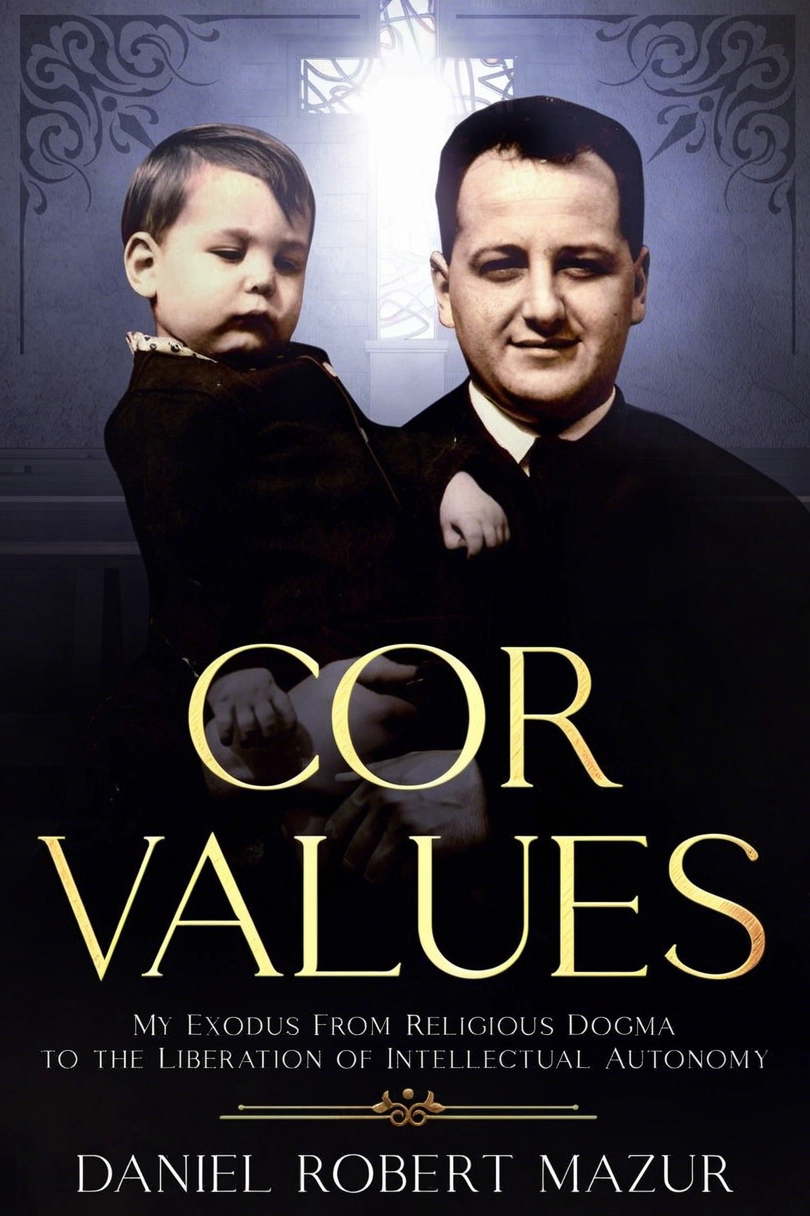
For the subsequent six years, my attempts to bridge the gap with my family were met with cold rejection. This deep-seated sense of abandonment not only fueled a profound identity crisis but also propelled me toward a psychological precipice. By 1987, at the tender age of 25, this crisis culminated in my involuntary commitment to Hutching Psychiatric Center. This poignant moment in my life marks the opening of my book, beginning with its first chapter, ‘Off at Grandma’s.’ Seated on my grandparents’ sofa, enveloped in a sea of memories, I delve into the formative days of my father’s church, the uncompromising doctrines we were expected to uphold, and the series of harrowing events that led to my hospitalization. Here, I lay bare the emotional and spiritual tumult that shaped these years, setting the stage for a journey of introspection and healing.
07
Thirty-six years of writing
This memoir began as a therapeutic exercise—a means to navigate my past and seek reconnection with my estranged family. Over the span of thirty-six years, these pages have transformed from personal reflections into a profound exploration of familial bonds broken and the enduring quest for authenticity amidst the pressures of conformity. Through chronicling my attempts to mend the rift with my father and understanding the stark divergences within our beliefs, I have unearthed the universal truth that diversity and genuine self-expression are not just vital for individual integrity but are also the cornerstones of resilient relationships.
My narrative aims not only to offer a window into my own soul-searching journey but also to resonate with anyone grappling with similar familial estrangements or identity crises. It is my deepest hope that this book will not only serve as a cautionary tale but also inspire others to cherish their bonds with loved ones, to embrace the rich tapestry of human differences, and to find the courage to stand firm in their truths. May these reflections guide you towards reconciliation and peace, not by erasing differences, but by celebrating them as the very essence of our shared humanity.